
Structural Drying: How Rapid Technology Accelerates Moisture Removal

Structural Drying Methodologies and Approaches
Direct-fired and indirect-fired heating units may be included to supplement traditional drying technologies, especially in environments where temperature control is required. Introducing heat to a space can increase the rate of evaporation but should be balanced to avoid potential overheating or secondary damage to materials. Careful management of temperature, airflow, and humidity is important for an effective methodology.
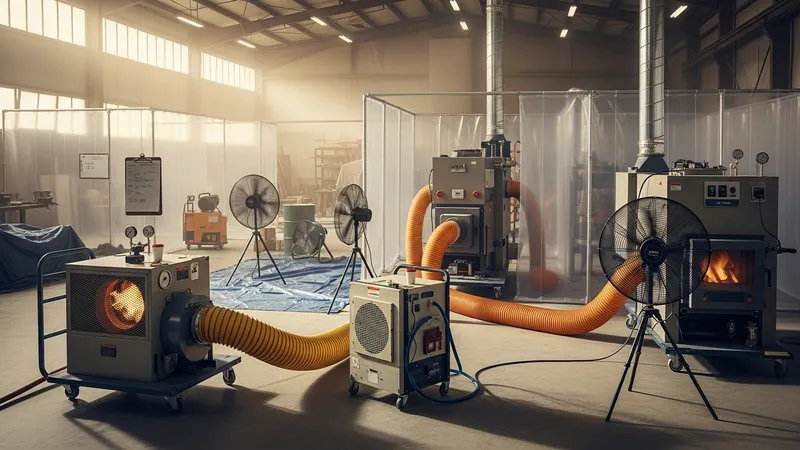
Containment barriers are sometimes installed to focus drying efforts on specific zones within a larger structure. This targeted approach may involve sealing off rooms or areas using plastic sheeting or temporary walls to concentrate airflow and dehumidification equipment where it is most needed. Segmented drying can lead to more efficient moisture removal by addressing individual moisture loads instead of the whole building at once.
Negative air pressure systems might be used to manage airflow, especially in cases involving potential contaminants or concerns about indoor air quality. By exhausting air to the outside, these systems can help prevent the spread of moisture-laden air and airborne particles. This approach complements standard drying strategies and is most applicable under certain environmental health protocols or site requirements.
The integration of process-monitoring technology allows for the adaptation of drying strategies as conditions evolve. For example, if measurements indicate persistent moisture in specific regions, operators may reposition equipment or adjust machine intensity. Data collection supports ongoing assessment, reducing the risk of incomplete drying and supporting documentation for insurance or compliance needs.