
Structural Drying: How Rapid Technology Accelerates Moisture Removal

Moisture Removal: Measurement, Progress, and Verification
Accurate measurement is essential to every phase of structural drying. Moisture meters are used to collect baseline data prior to the start of drying and to monitor progress at scheduled intervals. These readings enable teams to evaluate whether materials are progressing toward acceptable moisture levels as defined by relevant guidelines or standards. Infrared thermography may assist in visualizing hidden dampness within walls or ceilings.
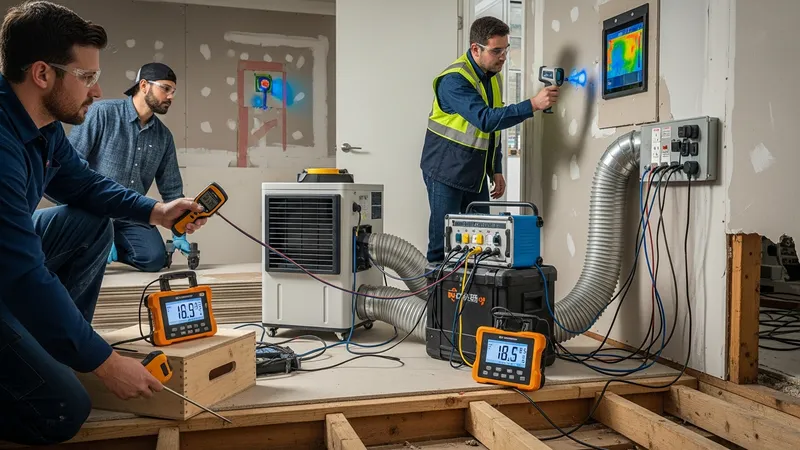
Establishing drying goals requires reference to material-specific standards, such as wood, concrete, and drywall, each of which has its own acceptable moisture threshold. Technicians carefully track reductions in relative humidity as well as temperature, adjusting equipment settings as necessary. This practice aims to restore affected areas in a controlled manner while avoiding over-drying or energy inefficiency.
Documentation and verification are standard in professional structural drying operations. Digital records of measurements, equipment placement, and drying times provide evidence that the area has been treated according to industry practices. Such reporting is often valued by insurance providers and helps property managers demonstrate compliance with recommended drying processes.
Independent third-party validation may be sought for larger or more complex drying projects. This process can involve external inspections, independent moisture verification, and comprehensive moisture mapping. Independent reviews serve as an additional measure to confirm the thoroughness of the process and to ensure transparency for stakeholders.