
Seasonal Pest Control: Understanding Pest Activity Patterns Throughout The Year

Seasonal drivers and environmental influences on pest activity
Ambient temperature and relative humidity commonly influence metabolic rates, development speed, and survival for many pest species. Insects often develop more rapidly during sustained warm periods and may produce additional generations in climates with extended warmth. Conversely, extended cool or dry spells can reduce activity or force pests to seek out microhabitats that buffer extremes. Rain events may increase mosquito breeding in standing water, while drought may concentrate rodents around irrigation systems and stored water. These drivers typically interact with local landscaping and building features to shape where and when pests appear.
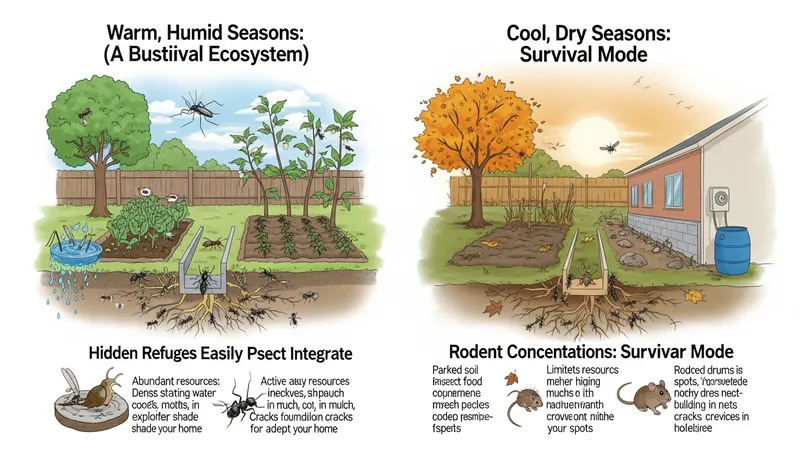
Vegetation and landscape design can change seasonal attractiveness for pests. Dense groundcover, mulched beds, and unmanaged shrubbery may provide shelter and humidity that favor certain insects and small mammals, particularly during dry seasons. Similarly, fruiting trees and vegetable gardens may create seasonal food pulses that temporarily increase local pest populations. Adjusting plant selection, spacing, and maintenance timing can be considered as part of a seasonal management framework; such adjustments may influence pest prevalence without implying any single required action.
Structural conditions and building systems often determine whether outdoor seasonal patterns translate into indoor problems. Gaps around doors, damaged screens, roofline openings, and foundation cracks may allow pests to enter when outdoor activity increases. HVAC systems and stored insulation can create warm pockets that are attractive during colder months. Seasonal maintenance such as clearing gutters or repairing weatherstripping may reduce entry opportunities, and tracking these interventions alongside observed pest activity can reveal correlations that inform future scheduling of maintenance.
Weather variability and climate trends may shift typical seasonal timing and intensity. Mild winters in some regions can allow survival of species that would otherwise be reduced by cold, while changes in precipitation patterns may alter breeding habitats. Monitoring long-term records of pest observations on a site can help detect shifts in seasonal peaks. Such tracking may be particularly relevant in areas where year-to-year weather variability is high, and it often complements short-term inspection data when planning seasonal activities.