
Seasonal Pest Control: Understanding Pest Activity Patterns Throughout The Year

Common household pests by seasonal phases and lifecycle timing
Certain pests tend to be more noticeable during particular seasonal phases due to lifecycle events or behavioral shifts. For example, spring often coincides with increased activity for ants and termite swarms as reproductive individuals disperse, while summer heat can heighten mosquito and fly presence where standing water or organic waste accumulates. Late summer into autumn frequently sees rodents seeking shelter and food storage sites as outdoor resources decline, and some insect pests move indoors as temperatures drop. These patterns are general and may vary with local climate and habitat.
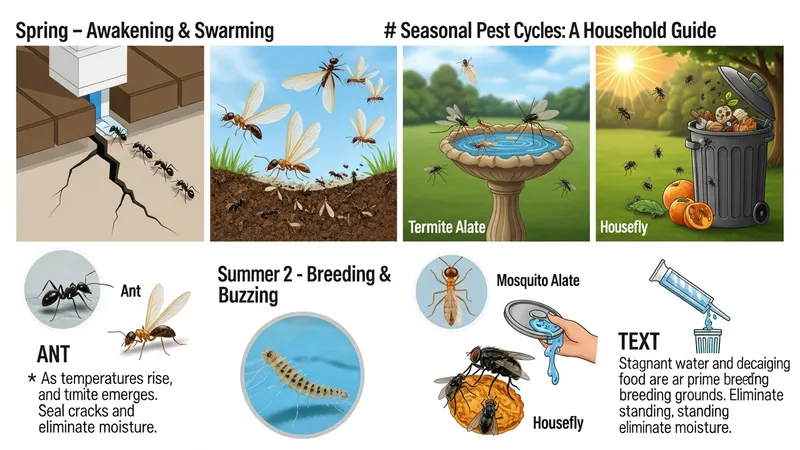
Lifecycle stage timing influences when control measures may have the greatest upstream impact on population growth. Treating or reducing habitat when immature stages are common may often reduce the magnitude of later adult peaks. For instance, interrupting breeding sites for mosquitoes before larvae develop can limit emergence, and managing nesting materials for rodents before young disperse may reduce population expansion. Identification of the species and a basic understanding of its lifecycle typically helps match seasonal activities to relevant lifecycle stages.
Season-specific inspection focus areas can change as weather and pest behavior shift. In wetter seasons, checking for standing water, clogged drains, and moisture accumulation may be more relevant, while drier seasons may require attention to irrigation patterns and dry food storage. During colder months, attention often shifts to potential indoor entry points and stored food vulnerabilities. These seasonal focal points commonly adapt to the examples introduced earlier, such as inspection schedules and habitat modification methods.
Seasonal records and photo documentation can strengthen recognition of recurring pest patterns on a property. Keeping simple logs of sightings, damage, and environmental conditions over multiple seasons may reveal trends that single observations miss. Over time, these records may help prioritize which pest types and which property areas warrant more frequent attention during specific seasonal windows. This approach typically encourages evidence-based timing rather than reactive responses alone.