
Roofing Selection: Key Factors For Choosing Durable Materials

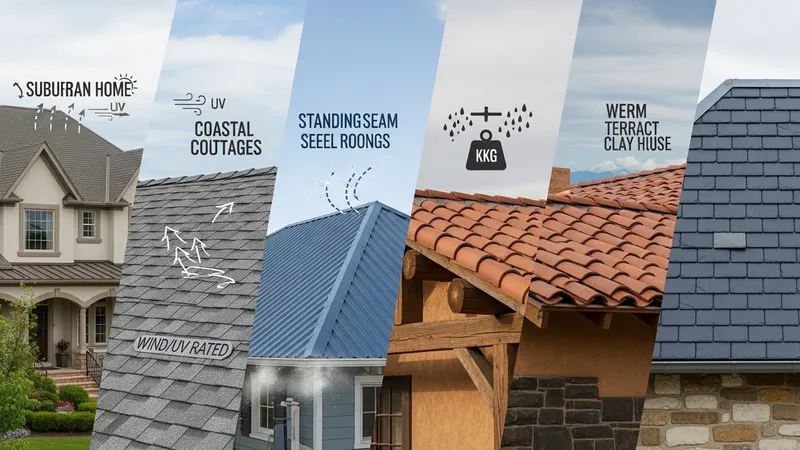
Material types and durability characteristics for roof coverings
Different material types present distinct durability profiles relevant to U.S. conditions. Asphalt composition shingles are widely used across many U.S. climate zones and may perform well where wind uplift and UV exposure are moderate; they often have ratings and classifications that installers reference. Metal systems, including standing-seam steel or aluminum, commonly feature factory-applied coatings that resist corrosion in many U.S. regions, though coastal salt exposure can accelerate wear without appropriate finishes. Clay and concrete tiles are frequently seen in southwestern and southern coastal areas of the United States and may tolerate high solar loads but require framing that handles their weight.
Natural slate has been used historically on U.S. buildings where long-term weathering resistance was a priority; intact slate can remain serviceable for many decades, but replacement materials and skilled installers are less common in some U.S. markets. Synthetic and composite products aim to reproduce visual characteristics of traditional materials while reducing weight and potentially lowering installation complexity; performance can vary among manufacturers, and U.S.-based testing standards or listings may help compare options. Each material category may include product lines with different tested wind, fire, and impact classifications applicable in U.S. code compliance.
Performance under impact (hail) and wind is often quantified through standardized tests that are used by U.S. insurers and code officials. For example, impact-resistant classifications or wind-uplift ratings commonly appear on product data sheets; these ratings can guide choices in regions prone to severe weather events. Hail resilience may be particularly relevant in parts of the central United States, while wind uplift testing can matter along Atlantic and Gulf coasts. Evaluating test listings and inspection reports from U.S. jurisdictions often provides practical insight into expected field performance.
Material compatibility with accessory components influences durability. For instance, certain underlayments and fasteners are formulated to work with specific coverings to reduce galvanic corrosion or ensure adhesive bonding at expected temperatures. In the United States, manufacturers and industry bodies typically publish installation guidance and accepted accessory pairings; following these details generally supports longevity. Where local installations deviate from standard practice, additional inspection and documentation may be prudent to assess potential long-term effects.