
Roofing Selection: Key Factors For Choosing Durable Materials

Selecting a roof covering for long-term performance requires detailed evaluation of how different materials respond to environmental exposure, structural load, and installation practices. Homeowners and building professionals commonly assess factors such as expected service life, resistance to wind and moisture, weight relative to roof framing, and compatibility with local building codes. Durability in this context refers to how well a material maintains its protective and aesthetic functions under typical United States climate patterns and maintenance routines.
Key aspects also include how the material ages (for example, gradual granule loss in some shingle types), the frequency of repairs over time, and how installation quality can affect lifespan. Consideration of supporting systems—underlayment, ventilation, flashings—and inspection access often influences material choice. When reviewing options within the United States, it may be useful to align material characteristics with local wind, hail, and snow loads and with codes such as the International Residential Code as adopted by many jurisdictions.
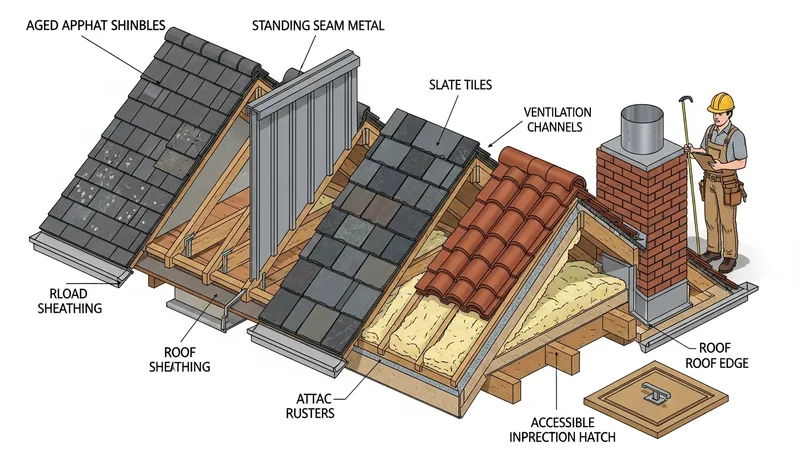
- Asphalt composition shingles: Commonly fiberglass-based or organic-mat products used across many U.S. climates; they often offer moderate initial cost and may provide an expected service life that typically ranges from about 15 to 30 years depending on grade and exposure. See the Asphalt Roofing Manufacturers Association for material details: Asphalt Roofing Manufacturers Association.
- Metal roofing (steel, aluminum, standing-seam): Panels or shingles that often resist wind uplift and can shed snow; typical service lives may extend to several decades when properly coated and installed. Industry resources: National Roofing Contractors Association.
- Ceramic (clay) and concrete tile: Heavy roofing units that commonly last multiple decades and may suit warmer climates or regions with salt exposure; structural capacity and attachment methods are key considerations in the U.S. building context.
- Natural slate: Dense stone tiles that often have long service lives when intact; weight and specialized installation can increase initial complexity and require suitable roof framing.
- Synthetic and composite products (polymer, rubber blends): Engineered to mimic traditional materials while offering lighter weight and moderate-to-long expected lifespans; formulations vary and performance may depend on UV exposure and ventilation.
Durability comparisons often consider both intrinsic material properties and the risk profile of a given U.S. location. For example, coastal regions may prioritize salt- and moisture-resistant coverings, while inland areas with high heat may weigh thermal expansion and UV stability more heavily. Wind resistance ratings and hail impact classifications, commonly referenced in U.S. insurance and building guidance, may influence selection. Material warranties and documented performance in similar climatic zones can provide context, but installation quality and roof deck condition typically have major effects on outcomes.
Support systems such as underlayment, ventilation, and flashings interact with material choice and can alter expected service life. Proper underlayment selection may reduce moisture migration, and ventilation strategies that follow U.S. building guidance can moderate attic temperatures and condensation risk. Flashing details at valleys, chimneys, and penetrations are frequent failure points; durable flashing materials and correct integration with the chosen roofing product often reduce localized degradation. When evaluating options, consider how these subsystems match the physical properties of the primary covering.
Structural implications matter because weight differences among materials affect framing requirements. Clay tile and natural slate may impose loads several times higher than asphalt shingles, which can require reinforcement of rafters or trusses in older U.S. homes. Conversely, lightweight metal or synthetic systems may allow retrofit without major structural changes. Roof slope and drainage patterns also influence material suitability: some products perform poorly on low-slope assemblies and may require specially rated systems and installation practices commonly referenced in U.S. roofing standards.
Life-cycle factors such as expected maintenance, repairability, and recyclability often contribute to durability assessments. In the United States, common maintenance needs include periodic sealant replacement around flashings, replacement of damaged units after hail events, and clearing of debris that traps moisture. Some materials may be easier to spot-repair, while others require matched units or specialist installers. Consideration of end-of-life handling—recycling availability or disposal requirements in local U.S. jurisdictions—may also affect long-term planning.
Cost is a component of selection but interacts with longevity and risk exposure. Initial installation costs may be lower for some materials yet entail earlier replacement cycles or higher maintenance. Conversely, higher initial cost materials may typically offer longer service intervals, though regional labor rates and permitting practices in the United States can shift total installed cost. Balancing upfront expense with expected performance under local climate and code requirements helps form a practical choice. The next sections examine practical components and considerations in more detail.