
Private Business Loans: How Small Businesses Can Access Alternative Financing

Cost factors and typical pricing patterns for private business lending in the United States
Pricing for non-bank business financing in the U.S. may vary widely by product and borrower characteristics. Online term loans often present APRs that can range from roughly 8% to 40% depending on credit risk, term length, and lender pricing practices. Merchant cash advances typically use factor rates (for example, 1.1 to 1.5) rather than APRs; when converted to APR, those arrangements often imply substantially higher annualized costs. Invoice financing fees are frequently expressed as a percentage of invoice value charged monthly or per-advance.
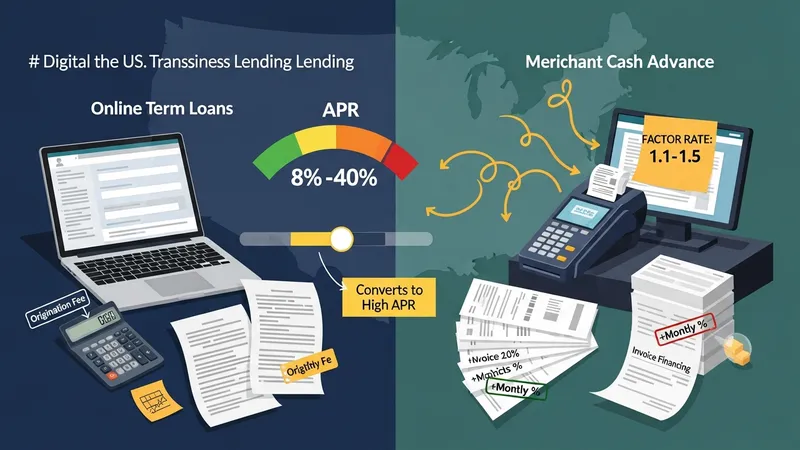
Loan size influences unit pricing: smaller advances tend to have higher effective pricing per dollar than larger facilities because fixed origination or servicing costs are spread over less principal. Private credit funds may offer lower relative pricing for larger commitments but may also include arrangement fees, covenant monitoring costs, or amortization structures that differ from online products. Fee structures may include origination fees, maintenance fees, prepayment charges, or draw fees, depending on the lender.
Rate transparency can vary. Some online platforms display representative APRs and sample payment schedules, whereas invoice financing agreements and MCAs may require calculation to compare to APR equivalents. Regulators and consumer groups in the U.S., such as the Consumer Financial Protection Bureau, have highlighted differences in how costs are disclosed across business lending products, which may complicate direct comparisons without careful accounting for all fees and repayment timing.
Given these patterns, small business borrowers often model repayment cash flows under conservative scenarios to assess affordability. Estimating monthly or weekly repayment obligations, adjusting for seasonality in receivables, and comparing total cost over the facility’s expected duration are common informational steps. These practices help translate varied pricing expressions into comparable cash-flow impacts for decision-making.