
Plumbing And Emergency Repairs: How Professional Plumbers Address Urgent Water And Drain Issues

Diagnostic tools and noninvasive methods used in urgent water and drain evaluations
Professional diagnostics often start with visual inspection and progress to specialized tools as required. Thermal imaging cameras may reveal temperature anomalies around piping, suggesting a hot or cold water leak, while moisture meters quantify saturation levels in building materials. Acoustic leak detectors are used where sound transmission can indicate pressurized flow inside concealments. These noninvasive methods can reduce the need for exploratory demolition by focusing access on areas most likely to yield meaningful findings.
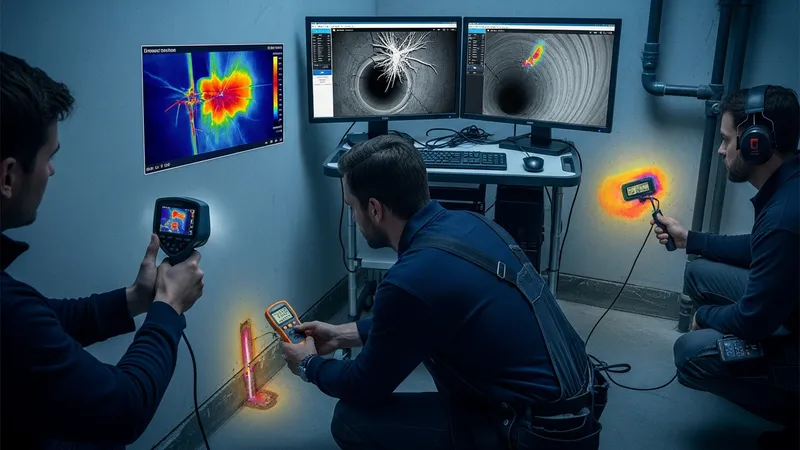
CCTV drain cameras are widely used to inspect the internal condition of drainage pipes. A camera run can identify cross-sectional blockages, root intrusions, collapsed sections, or offset joints. Video inspection helps determine whether cleaning, partial replacement, or relining is appropriate. In longer runs or municipal interfacing scenarios, camera surveys may be combined with locators that estimate depth and position relative to surface landmarks.
Pressure and flow testing can clarify whether systems maintain integrity under normal operating conditions. Controlled pressure tests may reveal slow leaks that are not immediately apparent, and flow measurements can indicate reduced capacity due to scaling or partial obstructions. When water quality is a concern, basic tests for turbidity, color, or odor are often performed to identify contamination that affects repair approach or worker safety considerations.
When diagnostics indicate concealed failures, minimally invasive exploratory techniques may be used. Small inspection ports, targeted access panels, or short exploratory openings can confirm findings from noninvasive tools before committing to larger repairs. These steps typically aim to minimize unnecessary disturbance while ensuring that repair plans are based on verifiable evidence about the fault location and mechanism.