
Plumbing And Emergency Repairs: How Professional Plumbers Address Urgent Water And Drain Issues

Repair techniques, materials, and temporary measures applied in urgent plumbing work
Repair strategies in urgent situations often combine immediate temporary measures with longer-term fixes. Temporary measures may include isolating the affected section with shut-off valves, applying mechanical clamps to slow flow, or using epoxy bands and wraps that can seal small leaks until a permanent repair is arranged. These approaches are chosen to limit further damage and to provide time for diagnostics and material procurement when immediate replacement is not feasible.
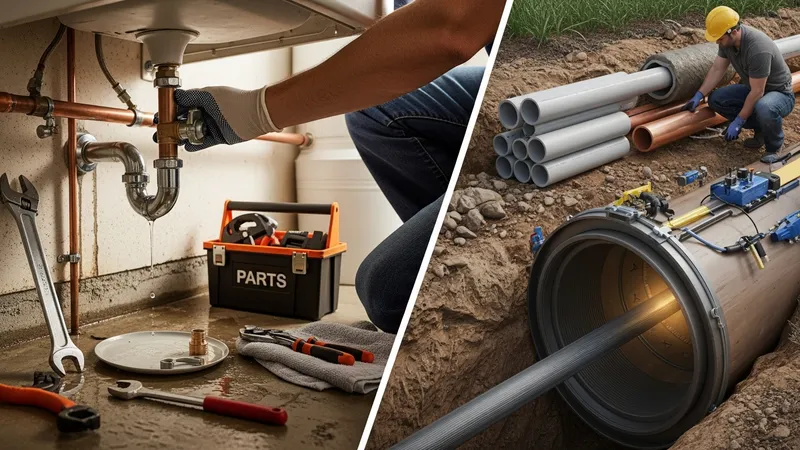
Permanently restoring pipe integrity can involve sectional replacement, full run replacement, or trenchless options such as cured-in-place pipe (CIPP) lining. Sectional replacement matches pipe type—such as copper, PEX, or PVC—to existing materials and system requirements. Trenchless relining may be considered where excavation would be disruptive; however, suitability depends on pipe condition, access points, and the nature of the defect. Material compatibility and code compliance are important considerations in selecting any permanent method.
For drain blockages, mechanical clearing with augers or snakes may suffice for localized obstructions, while hydro-jetting is often used for heavier buildup when pipe condition permits high-pressure cleaning. Following clearance, CCTV re-inspection helps confirm that the obstruction has been removed and checks for structural defects that may require future interventions. Where waste line contaminants are present, appropriate containment and disposal procedures are typically followed to control environmental exposure.
Valves, fittings, and ancillary fixtures are often replaced when they contribute to failure or when they do not meet current pressure or safety standards. Upgrading valves or access points can simplify future maintenance and reduce the likelihood of recurring urgent incidents. Decisions about component replacement are usually based on inspection evidence regarding corrosion, wear, and system compatibility rather than on speculative longevity estimates.