
Orthopedic Surgery: Overview Of Common Procedures And Care Pathways

Operative Techniques and Intraoperative Considerations in Orthopedic Surgery
Intraoperative decision-making commonly addresses anesthesia type, positioning, and approach selection as foundational elements of operative technique. Regional anesthesia techniques may be used alone or in combination with general anesthesia depending on patient factors and procedure type, and positioning is selected to optimise exposure while preserving neurovascular safety. Surgical exposure and soft-tissue handling practices typically prioritise preservation of critical structures and containment of bleeding. Use of intraoperative imaging, such as fluoroscopy, can assist in implant placement and fracture reduction for improved procedural accuracy.
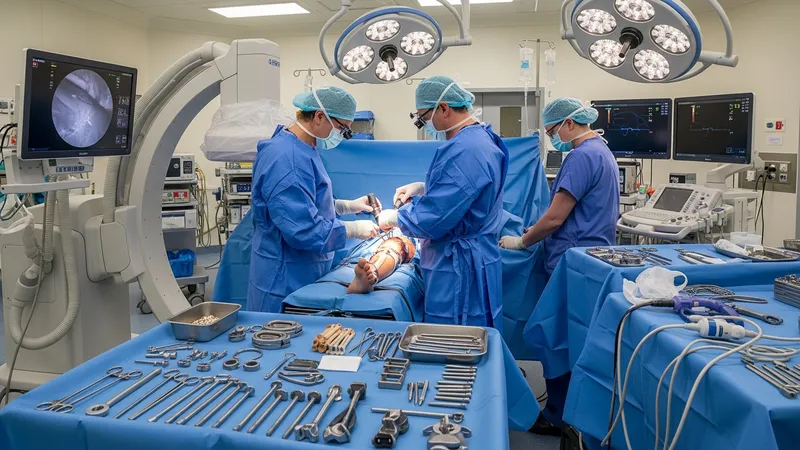
Implant handling and fixation strategies are central to many orthopedic operations and may involve temporary fixation, definitive hardware placement, and intraoperative testing of stability and range of motion. For arthroplasty, component alignment and soft-tissue balancing are often steps that influence early function; for fracture fixation, restoration of anatomic alignment and stable construct selection guide weight-bearing recommendations. Surgeons commonly weigh trade-offs between rigid fixation for early mobilization and biological considerations that support bone healing when choosing constructs.
Blood management and infection prevention are consistent intraoperative considerations across procedure types. Strategies may include meticulous hemostasis, use of topical agents, and protocolized antibiotic administration timed appropriately to incision. Sterile technique, instrument handling, and wound closure methods are part of broader infection control practices. In many settings, surgical teams follow institutional protocols designed to reduce variability and to document intraoperative steps that may impact postoperative monitoring and rehabilitation.
Technology integration, such as navigation systems or robotic assistance, is increasingly available for select orthopedic procedures and may be used to enhance alignment or reproducibility of component placement. The adoption of such tools often depends on institutional resources, surgeon training, and case selection. When used, these technologies typically supplement, rather than replace, standard surgical principles and clinical judgement. Teams generally consider the incremental benefits of technology against workflow implications and training requirements.