
Orthopedic Surgery: Overview Of Common Procedures And Care Pathways

Surgical Planning and Preoperative Care Pathways in Orthopedic Surgery
Preoperative planning commonly begins with a comprehensive clinical assessment and targeted imaging to characterise pathology and guide surgical approach. Plain radiographs are often first-line for bony alignment and joint space assessment, while CT or MRI may provide more detailed views of complex fractures or soft-tissue lesions. Laboratory tests and medical consultation may be used to identify comorbid conditions that can influence anesthesia or wound healing. In many practices, standardized preoperative checklists and pathway documents are used to ensure essential steps—such as medication reconciliation and risk stratification—are completed before operation.
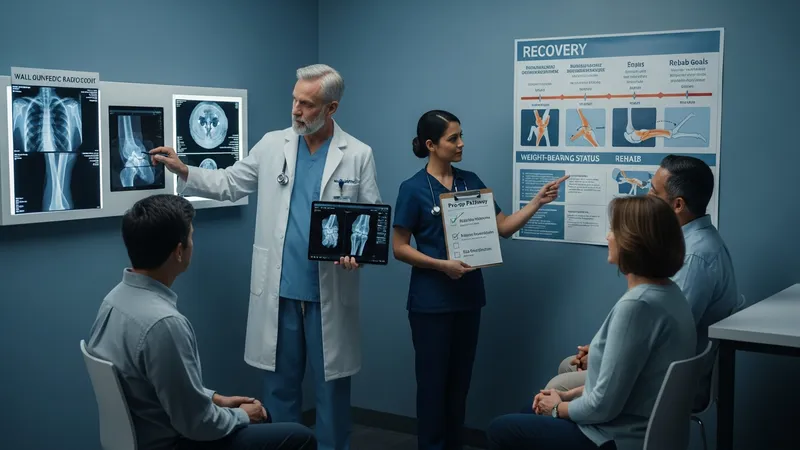
Patient education and expectation alignment are frequently part of preoperative pathways and may include discussion of typical recovery timelines, potential complications, and rehabilitation goals. Education tools can be verbal, written, or multimedia and often cover mobility restrictions, weight-bearing status, and signs that warrant clinical review. These informational elements typically aim to support adherence to postoperative protocols and to help patients and families plan for home support during early recovery phases. Education is usually framed as informative rather than prescriptive, acknowledging individual variability in recovery.
Optimization of modifiable risk factors is a common component of preoperative care and may include management of anemia, smoking cessation strategies, and assessment of nutritional status. These efforts often occur in collaboration with primary care or specialty services and are intended to reduce perioperative complications rather than to guarantee specific outcomes. For patients with significant medical comorbidities, multidisciplinary case reviews or preoperative anesthesia consultations may be employed to tailor perioperative monitoring and perioperative medication plans.
Pathway scheduling and resource coordination are practical considerations within preoperative planning that can influence patient flow and postoperative recovery. Prehabilitation programs may be offered in some settings to improve baseline strength and mobility prior to surgery, and scheduling processes often coordinate operative timing with availability of rehabilitation services. Such operational elements typically aim to smooth transitions between stages of care and to align clinical capacity with patient needs, while allowing adjustments based on individual clinical factors.