
Modular Home Financing: Steps To Prepare Your Budget And Application

Budget Components and Cost Estimation for Factory-Built Housing Projects
Estimating total project cost begins by separating the manufacturer’s unit price from site-specific expenses. Site work commonly includes clearing, grading, and foundation construction; these items are often contracted locally and priced independently of the unit. Utility connections for water, sewer, electrical, and septic can add material and labor costs that vary substantially with site accessibility. Transportation and crane or heavy-lift services for placing the modular sections are typical line items, and their costs may depend on distance, roadway access, and required permits. Collecting multiple estimates for site work often provides a more complete cost picture.
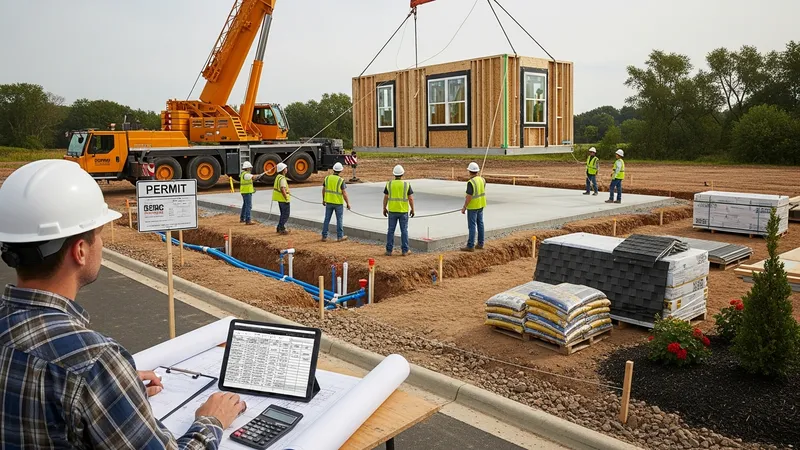
Options and interior selections from the manufacturer can incrementally increase the base price and may affect financing if they change the classification of the unit in terms of permanent attachment or system integration. External site upgrades, such as driveways, landscaping, and exterior finishes, are additional categories that can extend budgets. Professionals often recommend mapping each expense to a logical phase—purchase, site prep, set and hookup, final finishes—and documenting payment schedules to align with lender disbursement requirements. Clear phase delineation can assist both budgeting and lender review.
Contingency planning is a component of realistic budgeting, with commonly referenced contingency amounts often set as a percentage of the estimated subtotal to manage unforeseen conditions. The percentage may vary with site complexity, soil uncertainty, or supply-chain volatility; higher-risk scenarios may justify larger contingency reserves. Contingency funds can be held in a separate account or shown as available reserves in documentation to reassure underwriters evaluating project completion risk. Transparent documentation of how contingency funds will be accessed and used is typically useful during lender appraisal of project feasibility.
Permitting and inspection fees are frequently overlooked in initial estimates yet can affect timelines and cash flow. Local building departments may charge plan-review fees, permit fees, and inspection costs that vary by jurisdiction and project scope. Time required for permit approval can also influence when lender funds are needed, particularly if disbursements are tied to construction milestones. Including a schedule of anticipated permit steps and expected fee categories in the budget materials often clarifies the administrative and financial sequence for both applicants and lenders.