
Microfluidic Polymer Devices: Key Fabrication Techniques And Applications

Key Fabrication Techniques for Microfluidic Polymer Devices
Soft lithography, injection molding, and hot embossing are representative of the main manufacturing approaches for creating microfluidic polymer devices. Soft lithography generally involves casting PDMS against a mold patterned with microscale features—frequently produced through photolithography—to create negative relief structures. This method offers rapid prototyping and customization but may be limited in throughput. It is well suited for iterative academic research and small-batch experimental devices.
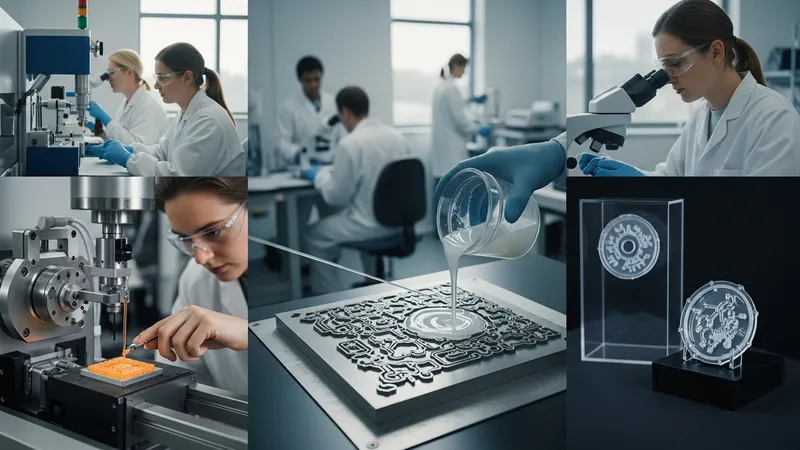
Injection molding involves developing a high-precision die corresponding to the desired channel geometries. Molten polymer is then injected under pressure into the mold, replicating the design with high accuracy. This process can be automated for volume manufacturing and is routinely used for thermoplastics. Typical challenges include maintaining mold quality, managing material shrinkage, and ensuring uniformity across batches.
Hot embossing shares similarities with injection molding but generally requires pressing a structured die into a solid polymer substrate at elevated temperatures. Following cool-down and demolding, the channel features remain permanently imprinted. This method allows production of relatively large numbers of microfluidic parts with good fidelity and low defect rates. Hot embossing is especially effective for thermoplastics with high glass transition temperatures.
Other emerging techniques, such as 3D printing and laser ablation, are being explored to address specific fabrication challenges. These may allow for faster prototyping, integration of complex design features, or working with non-traditional materials. Each fabrication technique comes with distinct considerations related to throughput, resolution, cost, and ease of integration with downstream processes.