
Microfluidic Polymer Devices: Key Fabrication Techniques And Applications

Material Choices in Microfluidic Polymer Device Fabrication
The choice of polymer materials in microfluidic device construction is often dictated by the application’s requirements for mechanical, chemical, and biological compatibility. Commonly utilized polymers include PDMS, PMMA, polycarbonate, and cyclic olefin copolymer (COC). These materials provide varying combinations of elasticity, transparency, chemical resistance, and processability. Engineers and researchers typically weigh trade-offs such as cost per unit, ease of fabrication, and compatibility with solvents or biological reagents. The optical clarity of some polymers, such as PDMS and COC, can support real-time imaging or analytical detection.
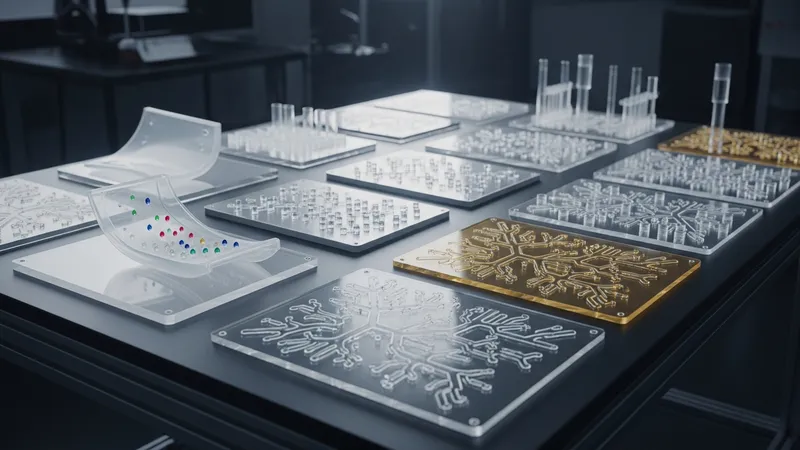
PDMS is frequently chosen for academic and experimental devices due to its flexibility and ability to replicate fine details. Its permeability to gases can be an advantage for cell culture applications but may present challenges for other uses where vapor loss or absorption of small molecules must be minimized. Meanwhile, PMMA and polycarbonate tend to be favored in industrial applications that demand robustness, batch consistency, and resistance to specific solvents.
Material selection can also influence the long-term durability, shelf-life, and reusability of microfluidic devices. Factors such as water absorption, environmental exposure, and potential leaching of additives from the polymer matrix are commonly evaluated. Some emerging applications may require polymers with specialty surface treatments to promote or inhibit fluid wetting, enhance bonding, or reduce non-specific adsorption of biomolecules, thereby improving analytical performance.
Ongoing development of new polymer grades and blends continues to expand the toolkit available for microfluidic fabrication. Selected materials might be further optimized through additives, surface modifications, or multilayer structures to enhance performance for specific operating conditions. This flexibility supports a wider range of device designs and applications as the field progresses.