
Mental Health Electronic Health Records: Understanding Core Features And Functions

Clinical documentation features in mental health EHRs
Clinical documentation modules within mental health EHRs typically include progress note templates, diagnostic coding support, and assessment forms for standardized screening tools. Progress notes often follow formats such as problem-oriented notes or SOAP-style entries adapted for behavioral health, and systems may incorporate built-in fields for common measures like symptom checklists or functional status ratings. Documentation features may also include time-stamped entries, version history, and metadata that help teams track who made changes and when. These capabilities can support clinical continuity while preserving a record suitable for audits and reporting.
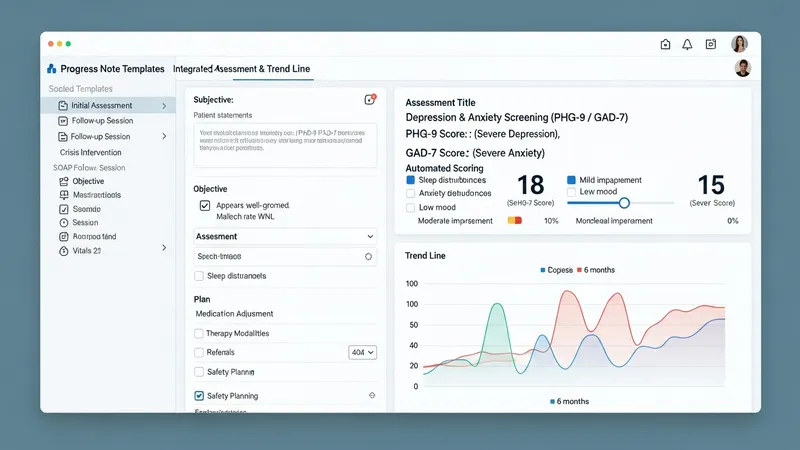
Assessment integration commonly enables clinicians to administer validated instruments electronically and store scores directly in the record. Measurement-based care workflows may link assessment results to treatment plans and alert clinicians to significant score changes. In routine practice, automated scoring and trend displays can assist clinicians in monitoring response, though interpretation remains a clinical task that often requires contextual notes and clinician judgment. Organizations may standardize which instruments are collected and how frequently to balance clinical utility with administrative burden.
Documentation for risk management and consent is frequently a focus in mental health EHRs. Templates may prompt clinicians to document safety planning, informed consent for treatment, and capacity assessments where relevant. These prompts can support consistency but also require careful configuration to avoid checklist-driven entries that omit narrative nuance. Additionally, privacy-sensitive documentation may be flagged within the system to limit access to only authorized roles, which is often important for sensitive behavioral health information in collaborative care settings.
Operational considerations include clinician usability and note-writing efficiency. Many organizations weigh the benefits of detailed structured data against the time required to complete templates. Common adaptations include using smart phrases, dropdown menus with customizable options, and voice recognition to streamline entry. From an implementation perspective, pilot testing templates with representative clinicians may reveal workflow mismatches and inform iterative adjustments to improve adoption while preserving the needed clinical detail.