
Mental Health Electronic Health Records: Understanding Core Features And Functions

Mental health electronic health records (EHRs) are digital systems designed to record, organize, and support clinical information specific to behavioral and psychological care. These systems typically structure clinical documentation, store longitudinal patient records, and integrate tools for assessment and progress tracking. In practice they may combine text-based notes, standardized screening scores, medication lists, and treatment plans to reflect ongoing mental healthcare encounters.
Beyond storage, mental health EHRs often include workflow elements such as appointment scheduling, secure messaging, billing triggers, and reporting capabilities that align with behavioral health workflows. The architecture of these systems can vary by vendor and setting, and they may emphasize different modules depending on whether the environment is outpatient therapy, community mental health, inpatient psychiatry, or integrated primary care.
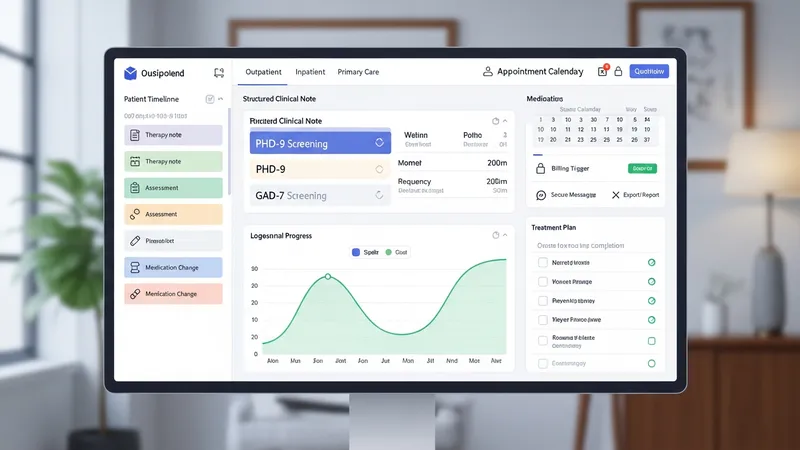
- Structured clinical documentation templates — standardized note formats and assessment forms for consistent recording of psychiatric evaluations, progress notes, and risk assessments.
- Treatment planning and outcome-tracking tools — modules for documenting goals, interventions, measurable outcomes, and progress over time.
- Scheduling and communication modules — integrated appointment management, secure messaging, and telehealth features that support session logistics and continuity of care.
Structured clinical documentation templates may support consistent information capture across clinicians and can often include fields for symptom ratings, risk indicators, and referral history. These templates typically reduce variability in record content, which may facilitate auditing and quality measurement. However, relying solely on structured fields can constrain narrative detail; many systems therefore allow a mix of templated fields and free-text notes so clinicians can preserve important contextual information about a patient’s presentation.
Treatment planning and outcome-tracking tools in mental health EHRs often allow clinicians to assign measurable goals, attach timelines, and record progress using validated scales. Such tools can be used to visualize changes across sessions and to generate summary reports for care teams. In multidisciplinary settings, treatment plans may be shared among therapists, prescribers, and case managers to support coordinated interventions, with access permissions controlling which team members can edit or view specific elements.
Scheduling and communication modules commonly include features for appointment booking, automated reminders, waitlist management, and telehealth session links. These elements can reduce missed appointments and support access, particularly when telehealth options are available. Secure messaging and portal-based communications may permit limited exchange of information between patients and clinicians while maintaining audit trails, although organizations typically define policies for what types of clinical communication are appropriate through these channels.
Interoperability and reporting functions are frequently part of mental health EHRs to enable data exchange and performance measurement. Systems may export standardized clinical summaries, produce registry-style reports for populations, and generate compliance-related documentation. When implementing reporting workflows, organizations often consider data standardization, mapping of assessment scores, and the frequency of extracts to balance operational workload with the need for timely information.
In summary, mental health EHRs combine structured documentation, treatment-planning tools, and workflow modules such as scheduling and secure communication to support behavioral healthcare delivery. These components may be configured differently across care settings and should be evaluated in relation to clinical workflows, data needs, and privacy considerations. The next sections examine practical components and considerations in more detail.