
Medical Surgical Equipment: Essential Instruments For Operating Rooms And Procedural Care

Types of Medical Surgical Equipment: categories and roles
Classifying surgical instruments by functional category helps clarify their roles during procedures. Cutting instruments, grasping implements, exposure devices, and energy-delivering systems form broad groupings that may overlap in practice. For example, a device primarily used for exposure can also provide secondary retraction or integrated illumination. Categorization may assist in organizing instrument trays and in training staff on typical procedural sequences. Facilities often maintain standardized sets corresponding to common procedures so that team members can anticipate available instruments and their intended functions.
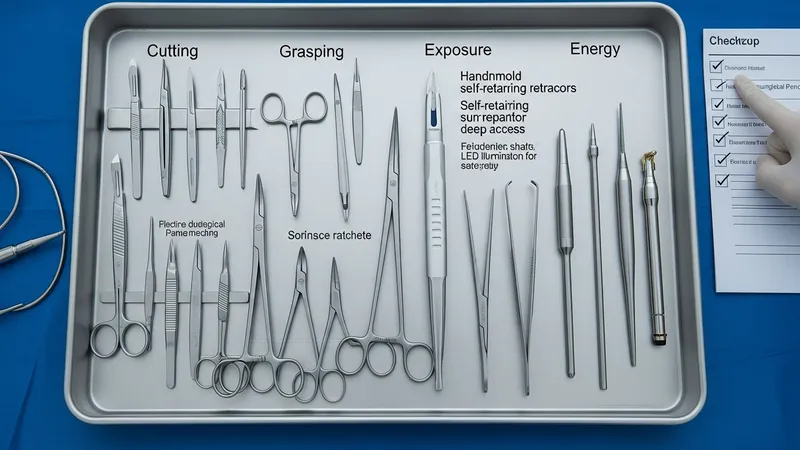
Within each category, variation in form factor addresses specific clinical needs. Cutting tools range from delicate scalpels for skin incisions to robust shears used in tissue trimming. Graspers and clamps may differ in tip geometry, jaw serration, and locking mechanisms to suit tissue types and surgical approaches. Exposure tools can be handheld or self-retaining and may be selected for access depth, stability, or minimal obstruction of the visual field. Recognizing these distinctions may aid in procedural planning and instrument selection.
Some instruments are designed for single use while others are reusable; this distinction often aligns with complexity, cost, and sterilization compatibility. Single-use items may reduce reprocessing workload and cross-contamination risk but contribute to consumable inventories. Reusable tools typically require validated cleaning and sterilization workflows and periodic inspection to ensure mechanical integrity. The decision framework for single-use versus reusable options often includes clinical frequency, sterilization capacity, and environmental or budget considerations.
Instrument modularity and compatibility also influence categorization. Modular handles, interchangeable tips, or standardized connectors for powered instruments can reduce the number of distinct items a facility needs to stock. Conversely, highly specialized instruments designed for niche procedures may be kept in dedicated specialty trays. Awareness of these organizational patterns can support logistics, staff training, and maintenance planning while keeping the focus on procedural requirements and safety.