
Medical Surgical Equipment: Essential Instruments For Operating Rooms And Procedural Care

In clinical operating rooms and procedural suites, a collection of manual tools and powered devices support the performance of invasive and minimally invasive tasks. These instruments include cutting and dissecting tools, grasping and clamping implements, retractors that expose surgical fields, and powered units that provide energy for coagulation or cutting. Design, material selection, and intended clinical use shape each instrument’s form and handling characteristics, and many items are made to be compatible with sterilization processes or single-use workflows.
These devices are organized by function and by the stage of a procedure in which they are used. Some are primarily tactile and operated by hand, while others integrate optics or electrical energy to assist with visualization or tissue modulation. Device selection in a clinical setting may account for factors such as precision, durability, sterilization method, and compatibility with other tools. This information-focused article outlines representative examples and examines practical considerations linked to these instruments.
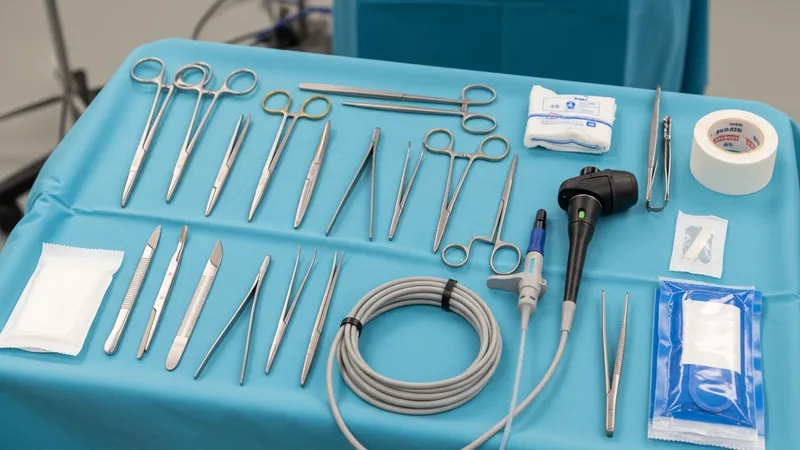
- Scalpels and blade systems — small, sharp cutting instruments designed for initial incisions and precise tissue dissection; available in reusable handles with disposable blades or fully single-use formats.
- Forceps and hemostats — grasping and clamping tools used for tissue manipulation and temporary vessel control; various tip geometries and locking mechanisms exist to accommodate different tasks.
- Electrosurgical devices and handpieces — powered units that deliver controlled electrical energy for cutting or coagulation; typically paired with dedicated handpieces and grounding/return systems.
Materials and surface finishes commonly influence instrument performance and lifecycle. Stainless steel alloys are frequently used for durability and corrosion resistance, while polymers may appear in handles or single-use devices to reduce weight and manufacturing cost. Surface treatments such as passivation or electropolishing can reduce surface roughness and may make cleaning and sterilization more predictable. Manufacturers and clinical users often consider material trade-offs: metals for reusability and rigidity, polymers for disposability and reduced cross-contamination risk.
Sterilization and infection-control compatibility are fundamental considerations. Instruments intended for repeated use are often designed to tolerate autoclave temperatures and steam exposure, or alternative methods like low-temperature sterilization for heat-sensitive components. Single-use devices remove the need for reprocessing but add logistical and environmental considerations. Cleaning protocols, packaging approaches, and validation of sterilization cycles typically form part of facility policies and may influence selection and inventory practices.
Ergonomics and human factors design can affect intraoperative efficiency and operator fatigue. Handle size, weight distribution, and tactile feedback may vary among similar instrument types and can influence control during delicate maneuvers. In team settings, standardization of instrument layouts and clear labeling often helps reduce handling errors. Training and familiarity with instrument sets may reduce procedure time variability and support coordination between primary operators and assisting personnel.
Integration with visualization and energy-based systems is an increasing feature of many devices. Some instruments are designed to accept modular optics for magnification, while others interface with powered consoles for electrosurgery or ultrasonic cutting. Compatibility standards and connector types may vary, so facilities typically review interface requirements when combining devices from different sources. Such considerations may affect storage, maintenance, and equipment lifecycle planning.
In summary, the instruments used in operative and procedural settings encompass a range of manual and powered tools differentiated by function, materials, sterilization pathways, and ergonomic design. Selection and use are shaped by clinical needs, reprocessing capacity, and compatibility with other systems. The next sections examine practical components and considerations in more detail.