
Manufacturing ERP Software: Key Features And Functional Capabilities

Deployment and cost considerations in Manufacturing ERP Software: Key Features and Functional Capabilities
Deployment options commonly include cloud-hosted SaaS, on-premise installations, or hybrid models. Cloud deployments may reduce initial capital expenditure and can scale subscription costs by user or module; typical cloud pricing in the Italian market may range approximately from €30–€200 per user per month depending on functionality and support levels. On-premise deployments typically involve one-time licence fees and implementation costs that can range from several thousand to tens of thousands of euros, influenced by customisation and integration complexity.
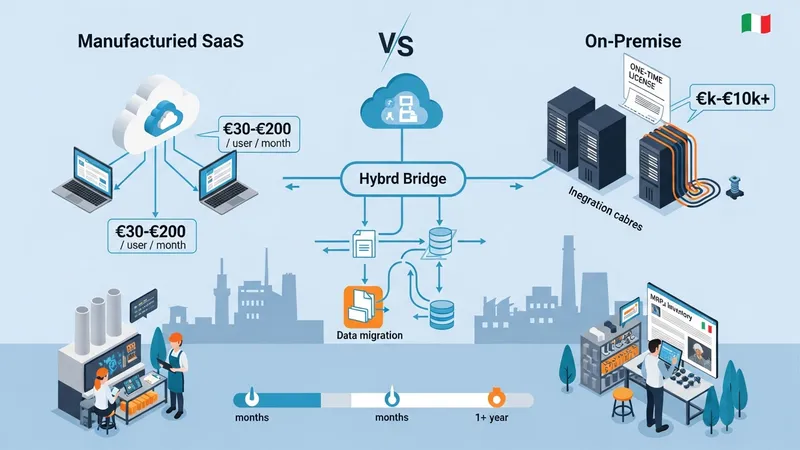
Implementation timelines and resource needs often vary with company size and production complexity. Small to medium-sized Italian manufacturers may achieve core MRP and inventory functionality in a few months, while larger, multi-site or highly customised projects can take a year or more. Internal resources for project governance, data migration, and change management commonly affect timelines and should be planned as part of total cost of ownership.
Licensing models and ongoing support terms influence long-term cost structures. Vendors may offer tiered modules, per-user subscriptions, or enterprise licences; maintenance and support agreements often represent annual costs that should be budgeted. For manufacturers in Italy, additional considerations may include localised training in Italian, vendor support availability in local time zones, and potential costs for integrations with national services such as the Sistema di Interscambio for electronic invoicing.
Cost-control strategies frequently involve phased rollouts, prioritising high-impact modules first and deferring specialised features. Typical insider considerations include reducing custom code to limit maintenance, reusing industry-standard templates for bills of materials and routings, and planning data-cleaning efforts in advance to minimise migration delays. These approaches can often lead to more predictable schedules and clearer budget outcomes.