
Manufacturing ERP Software: Key Features And Functional Capabilities

Regulatory, quality, and operational considerations in Manufacturing ERP Software: Key Features and Functional Capabilities
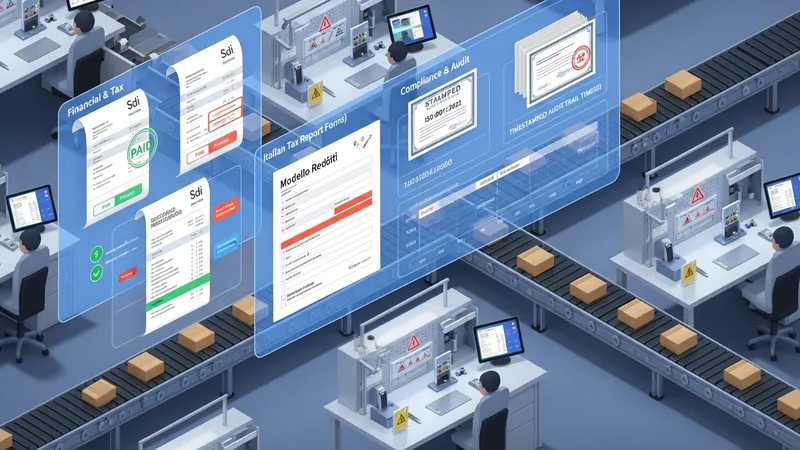
Regulatory compliance in Italy often influences ERP requirements. For example, electronic invoicing via the Sistema di Interscambio (SdI) and specific tax reporting formats are common considerations. In regulated sectors—food, medical devices, chemicals—ERPs may be expected to handle lot traceability, certificate management, and audit trails. Organisations may typically assess whether a vendor provides out-of-the-box templates for compliance reporting or whether custom development will be required to meet sector-specific rules.
Quality management modules in ERP often encompass inspection plans, nonconformity tracking, corrective actions, and supplier quality metrics. In Italian manufacturing environments, where supplier networks and subcontracting are common, quality functions that trace components through receiving, processing, and final shipment may be critical. Systems can typically record inspection results and link them to production lots to support recalls or customer inquiries if they arise.
Operational considerations include scalability, performance under peak production loads, and the ability to support multiple production sites or languages. Italian firms with export activities may require multi-company or multi-currency support; while domestic-focused manufacturers may prioritise Italian-language interfaces and local reporting formats. Capacity planning and resource levelling features can often be used to simulate production scenarios and evaluate operational trade-offs.
Data retention, auditability, and reporting capabilities are practical elements for maintaining compliance and operational transparency. ERPs that provide configurable reports and dashboards can help operations and finance teams monitor yield, scrap, supplier lead times, and order fulfilment. When choosing or configuring features, organisations in Italy may consider retention policies aligned with statutory requirements and internal audit practices to ensure records are available for the necessary periods.