
Lead Generation Services: Understanding Core Strategies And Processes

Lead qualification, scoring, and data handling practices
Qualification frameworks transform raw captures into prioritized leads for sales follow-up. In U.S. enterprise contexts, lead scoring may combine firmographic attributes (company size, industry), behavioral signals (content downloads, page visits), and explicit form responses. Scores are often numerical thresholds used to determine routing: a lead that meets a minimum score may be assigned to an account executive, while lower-scoring leads enter nurture tracks. These models may be recalibrated periodically using closed-loop feedback from sales results to refine predictive signals.
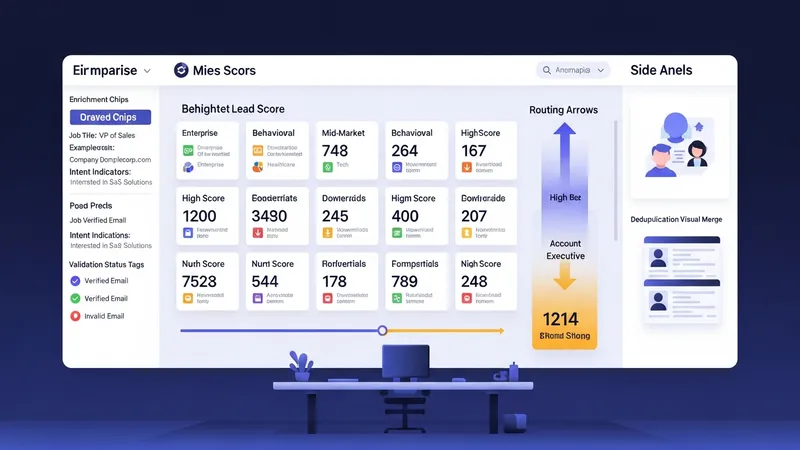
Data handling includes enrichment, validation, and deduplication routines. Enrichment services append attributes such as job title, company domain, or intent indicators, which can aid routing and segmentation. Validation routines—email syntax checks, phone-number format checks, and spam filters—are commonly applied to reduce false positives. Deduplication logic in CRM systems helps avoid repeat outreach and preserves historical context, and U.S. teams often adopt policies for merging or archiving duplicates to maintain single-lead views.
Privacy and consent records are integral to qualification workflows in U.S. operations. Capturing explicit opt-in language on forms, keeping timestamped consent logs, and storing source attribution enable marketers to demonstrate lawful basis for communications and to respect unsubscribe requests. For telephonic contacts, consent and calling-window records are frequently documented to align with federal and state rules. These practices serve both operational clarity and regulatory traceability.
Insider considerations for scoring and handling include assigning different SLA windows by lead tier and tracking lead aging metrics. For example, higher-scoring leads may be routed with a shorter response SLA, while nurtured leads may be scheduled for automated follow-up sequences. Teams often test different attribute weightings and monitor downstream conversion rates—rather than relying solely on initial submission data—to ensure the scoring system aligns with actual sales outcomes.