
Lead Generation Services: Understanding Core Strategies And Processes

Channels and formats used in lead generation services
Digital search and social channels are primary sources for many U.S. lead-generation programs. Search engine ad formats with lead capture extensions can surface to users actively seeking a solution, while social lead ads may capture attention within feeds and prioritize quick completion on mobile devices. Platform-specific formats commonly used in the United States include Google Lead Form Extensions and vendor documentation for social lead ads. Landing pages, gated downloads, webinar registrations, and phone calls remain complementary formats depending on the target segment and product complexity.
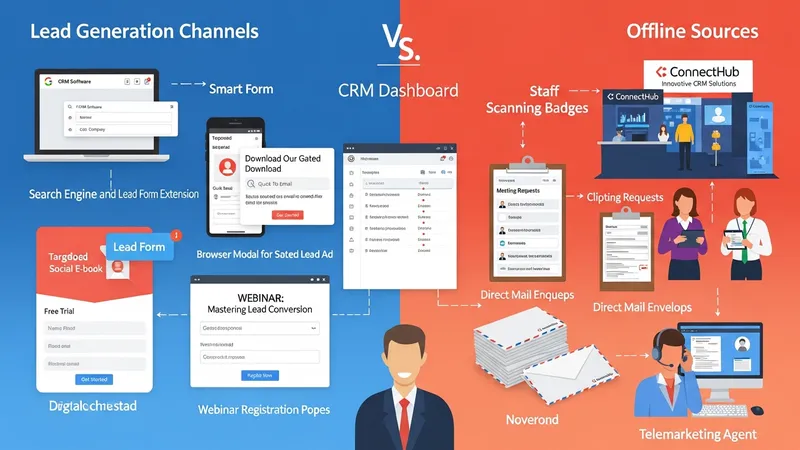
Offline channels continue to play a role in certain industry verticals. Trade shows and professional events in the United States often generate meeting requests or badge-scan lists that feed into lead workflows, and direct mail or telemarketing can still produce qualified responses for some audiences. These offline sources typically require manual verification and structured import to CRM platforms, and teams commonly treat them with different scoring rules to reflect the channel’s propensity for higher initial engagement but varying qualification depth.
Form design and required fields influence lead quality and completion rates. Short, single-field capture points may increase completion but limit qualification data; conversely, multi-field forms can improve initial screening at the cost of lower conversion. Many U.S.-based programs use progressive profiling—collecting minimal information initially and requesting additional details on follow-up interactions—to balance ease of capture with richer qualification over time. Accessibility and mobile optimization are additional considerations that can affect completion on common devices.
Channel selection typically reflects audience behavior and budget trade-offs. For example, B2B programs in the United States often include LinkedIn or industry event capture for targeted outreach, while consumer-facing programs may emphasize programmatic display and social channels for broader reach. Teams commonly pilot small tests across channel mixes, measure initial CPL and conversion rate, then reallocate spend based on observed patterns rather than assuming fixed channel performance.