
Insulated Prefabricated Houses: Key Construction Features And Materials Explained

Insulation materials and thermal performance in prefabricated components
Insulation cores in factory-made panels may be rigid foam, mineral wool, or other engineered materials. Polyisocyanurate and polyurethane foams typically offer higher nominal thermal resistance per unit thickness, while expanded polystyrene (EPS) and extruded polystyrene (XPS) provide different balances of moisture resistance and compressive strength. Mineral wool cores may be chosen for improved vapor permeability and non-combustible properties. The effective thermal performance of a panel often depends on core thickness, facing materials, and the presence of thermal bridges at connectors and joints.
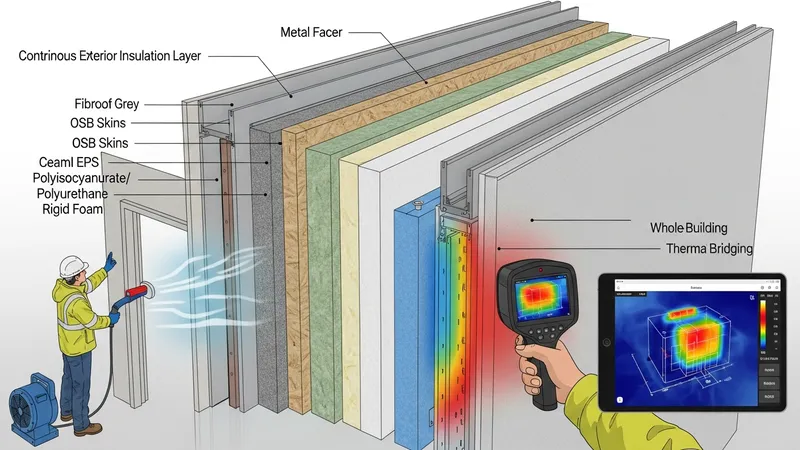
Continuous insulation strategies are frequently applied across panelized assemblies to reduce heat flow through framing members. By placing a continuous insulating layer on the exterior face or integrating insulation within a sandwich panel, designers may reduce linear heat losses at studs and fasteners. The overall thermal performance of an assembled building envelope typically depends on both component R-values and the quality of joints, seals, and service penetrations. Field testing such as whole-building energy modeling, blower door testing, and in-situ thermal imaging is commonly used to evaluate assembled performance.
Moisture and vapor control are important when selecting an insulation type for prefabricated panels. Some rigid foams act as vapor barriers when installed continuously, while other systems use vapor-open materials to allow drying to at least one face. The hygrothermal behavior of a wall or roof assembly may be modeled to assess condensation risk, particularly where insulation is placed on the exterior side of a structural sheathing or where mixed-material facings are used. Designers may pair insulation choices with appropriate membranes, drainage planes, and ventilation strategies to manage moisture safely over the building lifespan.
Fire performance and regulatory considerations can influence insulation selection and detailing. Certain foam cores may need protective facings, fire barriers, or specific coverboard systems to meet code requirements in a given jurisdiction. Mineral wool cores often provide higher melting points and may be specified where non-combustibility is a design requirement. Testing protocols such as standardized flame spread and smoke production tests, as well as system-level fire resistance testing, are commonly referenced when documenting compliance for prefabricated assemblies.