
Insulated Prefabricated Houses: Key Construction Features And Materials Explained

Structural systems and panel types for insulated prefabricated houses
Structural systems for factory-produced insulated components commonly fall into panelized and volumetric categories. Panelized systems use large wall, roof, or floor panels that span between supports and are joined on-site; volumetric modules are three-dimensional units that may contain finished interior surfaces and services. Within panelized options, structural insulated panels (SIPs) are notable for combining facings and a core into a single structural element, while sandwich panels separate structural frames from insulation cores. Load paths in all systems are defined by connections at panel edges, corner posts, and interface hardware, and designers typically review fastener schedules and bracing strategies to ensure continuity of structural loads through assembled components.
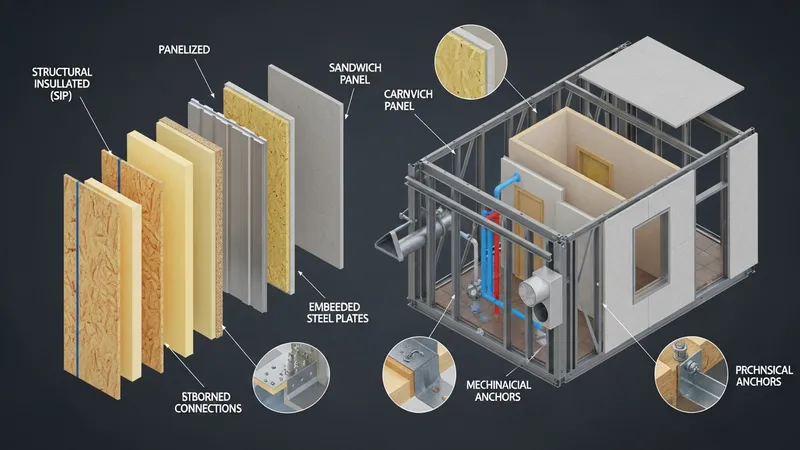
Panel facings vary according to structural and durability needs. Engineered wood facings such as OSB are often used with foam cores where panelized stiffness and screw retention matter, whereas metal or cementitious facings may be selected for cladding-integrated sandwich panels. Light-gauge steel frames paired with insulated sheathing panels can be used for longer spans or where non-combustible construction is required. Connection details such as splines, embedded plates, and mechanical anchors are commonly specified to transfer shear and gravity loads while also accommodating thermal expansion and differential movement between materials.
Designers may consider thermal bridging at structural elements, particularly where framing members penetrate continuous insulation layers. Strategies to limit thermal bridging include using continuous exterior insulation layers, thermally broken connectors, and insulated connectors within sandwich designs. For framed modules, isolating structural members from exterior cladding with thermal spacers or adding exterior insulation can reduce linear heat flow. These measures are balanced with structural requirements, moisture control detailing, and service routing to maintain an integrated envelope.
Service integration influences panel type selection and detailing. Panels or modules that arrive with pre-routed mechanical, electrical, and plumbing services can reduce on-site work but require precise factory coordination and tolerance management. Access for inspection and potential maintenance is considered when specifying built-in service chases or removable panels. Overall, system selection may reflect a project’s priorities for structural performance, thermal continuity, and the degree of factory finish versus on-site completion.