
Insulated Prefabricated Houses: Key Construction Features And Materials Explained

Prefabricated houses that incorporate continuous insulation are produced by assembling building components in a controlled factory environment.
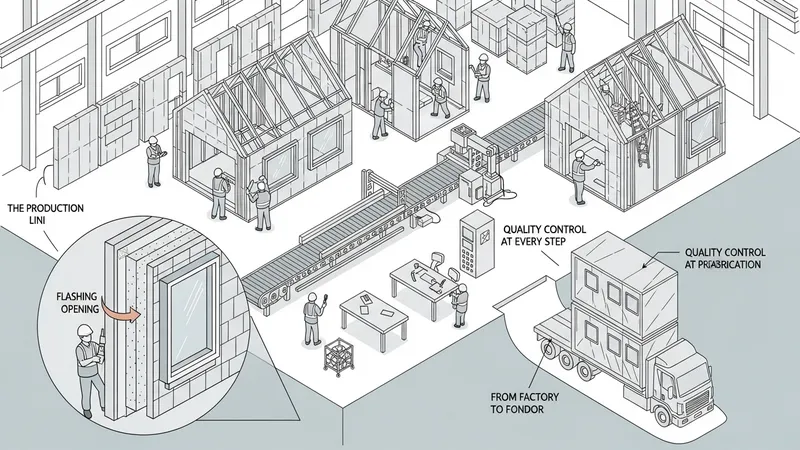
Components used in these factory-built systems typically include framed modules, panelized wall and roof assemblies, and composite sandwich panels. Each component is engineered to meet both structural and thermal requirements, with attention to junctions, openings, and mechanical service penetrations. The controlled environment may reduce variability in material installation and may facilitate quality control processes such as dimensional checks, insulation continuity verification, and pre-installation of flashing and membranes. These factors can influence on-site labor needs and sequencing without making prescriptive claims about outcomes.
- Structural insulated panels (SIPs): Factory-made panels combining structural facings (often engineered wood or metal) with a continuous foam core; used for walls and roofs and described as providing both structure and insulation in a single element.
- Pre-insulated sandwich panels: Panels with rigid insulation cores bonded between metal, cementitious, or composite facings; typically used where lightweight, high-strength panels are desirable for cladding or secondary structure.
- Insulated modular frames: Volumetric modules or framed panels where timber or light-gauge steel framing is combined with cavity and continuous insulation strategies; modules may arrive with interior finishes or service rough-ins already installed.
When comparing panel and module types, attention often centers on the interface between structure and thermal layer. For example, SIPs integrate the structural facings and insulation core so the thermal break is continuous across the panel face, while framed modules may rely on both cavity insulation and exterior continuous insulation layers to reduce thermal bridging. Designers may evaluate connection details, edge conditions and load transfer paths to maintain structural integrity without compromising the continuity of the thermal envelope. Junctions around openings and between panels typically require detailing to preserve air and moisture control.
Material choices for cores and facings may vary by performance priorities and environmental constraints. Rigid foam cores such as polyisocyanurate, polyurethane, and expanded polystyrene (EPS) each have different density, compressive strength, and thermal resistance characteristics; mineral wool cores are an alternative where incombustibility or vapor-permeability is prioritized. Facing materials can include oriented strand board (OSB), plywood, steel, aluminum, or cementitious boards. Each combination brings trade-offs in thermal performance, fire classification, moisture tolerance, and recyclability that stakeholders may weigh based on project goals.
Factory processes often incorporate quality controls that influence on-site assembly. Typical factory checks may include dimensional verification of panel geometry, core density testing, adhesive cure monitoring for sandwich panels, and pre-installation of seals or gaskets at strategic joints. These measures can help reduce the need for corrective work in the field. Transportation and handling constraints may also affect panel dimensions and connections; designers often adapt module sizes to available transport limits and lifting equipment to balance factory efficiency with on-site practicality.
Thermal and air-tightness performance in insulated prefabricated systems frequently depends on continuous insulation strategies and effective joint detailing. Continuous exterior insulation can reduce linear thermal bridging at studs and fasteners, while careful sealing of panel joints and penetrations can support lower infiltration rates. Testing such as blower door measurements and thermal imaging is commonly used to assess field performance after assembly. These diagnostic approaches may inform iterative improvements in factory detailing and on-site sealing practices without implying guaranteed performance levels.
In summary, houses assembled from insulated prefabricated components rely on integrated structural and thermal systems, varied material cores and facings, and factory-based quality control to form coordinated building envelopes. The following pages examine structural systems, insulation materials, manufacturing and assembly logistics, and durability considerations in more detail. The next sections examine practical components and considerations in more detail.