
Financial Technology Trends: Key Innovations Reshaping Banking And Payments

Regulatory and compliance considerations in the United States
Regulatory oversight in the U.S. spans multiple agencies depending on function: the Federal Reserve and Federal Deposit Insurance Corporation (FDIC) address banking safety and settlement issues, the CFPB focuses on consumer protections, and the SEC may engage when services intersect with securities. Payment systems also interact with private network rules from card networks and with NACHA rules for ACH transfers. Firms implementing fintech solutions typically map regulatory applicability early to understand licensing, reporting, and consumer-disclosure obligations.
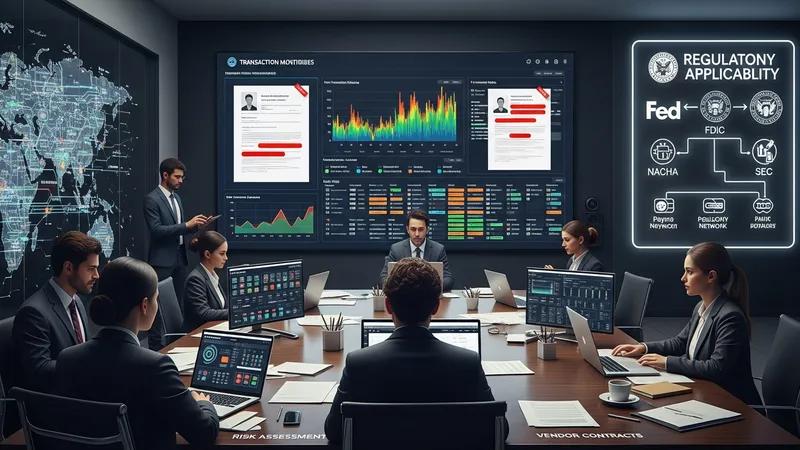
Compliance measures commonly considered include anti-money laundering (AML) controls, customer identification (KYC) processes, and data-security practices aligned with U.S. standards. For example, transaction monitoring systems in a U.S. bank may use threshold-based and model-based rules to flag unusual activity, after which human review and filing obligations can apply. Firms often document risk assessments and vendor management policies to demonstrate oversight of outsourced technology in line with supervisory expectations.
Privacy and data protection considerations in the United States vary by state and sector; practitioners may reference guidance from the CFPB and state regulators when designing data-retention and consumer-access features. Contracts with third-party providers typically specify permissible data uses, breach notification timelines, and audit rights, reflecting the need to maintain consumer protections while enabling API-based integrations and analytics.
Regulatory engagement can also shape product timelines: pilot programs and sandbox arrangements may be considered to test novel services with limited consumer exposure. When evaluating such approaches, institutions often document consumer disclosures, monitoring metrics, and escalation paths to regulators. These preparatory steps may reduce implementation friction and support clearer supervision of emerging payment and banking functions.