
Digital Twin Platforms: Foundations And Applications In Manufacturing

Security, privacy, and operational considerations for U.S. manufacturers
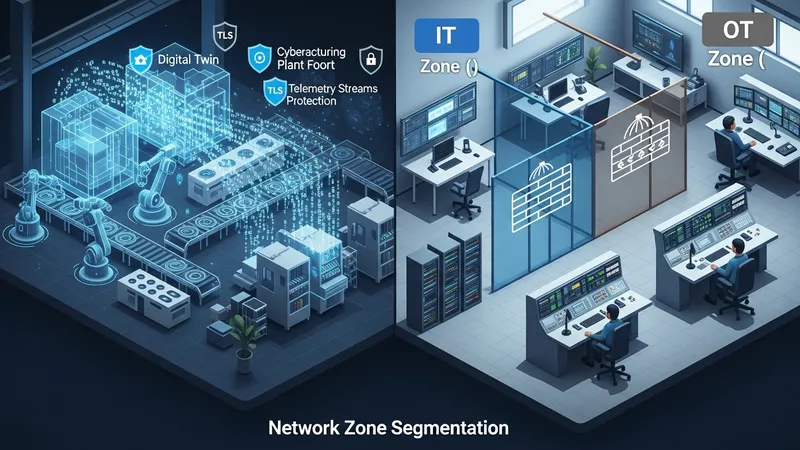
Security is a core operational consideration when connecting plant equipment to a digital twin platform. Typical mitigations include network segmentation between IT and OT, use of secure protocols (for example, TLS for telemetry), role-based access controls, and credential management for devices. U.S. manufacturers often reference guidance from the National Institute of Standards and Technology (NIST) and industry bodies to align practices with broadly accepted frameworks addressing industrial control system security.
Data privacy and IP protection influence decisions about cloud tenancy and data residency. Companies that handle sensitive process data frequently choose private or dedicated cloud options, or implement strict anonymization and aggregation before offsite transfer. Contract terms and vendor security controls are examined as part of procurement, and internal policy teams commonly require evidence of third-party audits or compliance certifications for cloud-hosted services used in manufacturing contexts.
Operational readiness includes staff training, change-management practices, and playbooks for failure modes. Introducing a twin that influences workflows requires documented operating procedures and clarity on who can approve changes to models or automated actions. U.S. plants often run staged rollouts and use shadow-mode deployments—where model recommendations are monitored but not acted upon automatically—before enabling bidirectional control to reduce unintended disruptions.
Resilience planning addresses both cyber incidents and equipment failures. Backup data flows, redundant sensors, and fail-safe control logic help maintain production when a twin or associated services become unavailable. Regular incident response exercises that include IT and OT stakeholders are commonly used to test assumptions in recovery plans and ensure coordination during cross-domain events.