
Digital Twin Platforms: Foundations And Applications In Manufacturing

Cost factors, deployment patterns, and standards alignment in manufacturing twins
Cost components for digital twin initiatives typically include initial integration engineering, ongoing data storage and compute, licenses for platform software, and personnel costs for model development and maintenance. In the United States, manufacturers often pilot a limited scope to establish baseline metrics before wider rollout; pilots can reveal realistic operating expenses such as edge hardware, cloud compute hours, and specialist staffing needs. Budget planning commonly uses conservative estimates and sensitivity analysis for scale-up scenarios.
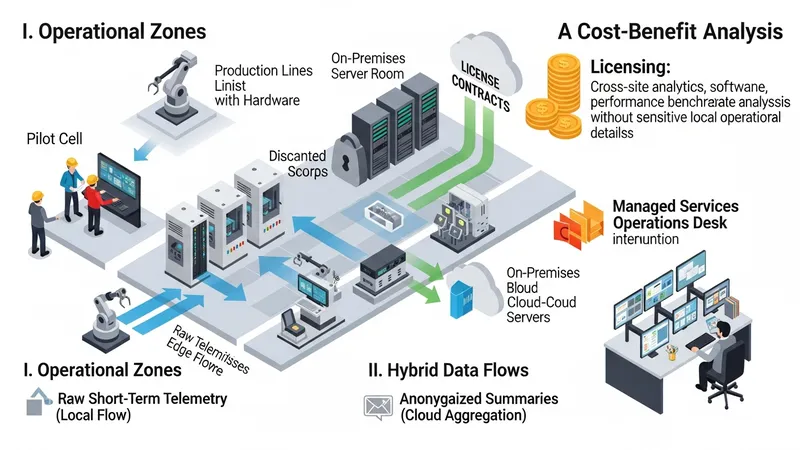
Deployment patterns vary from vendor-hosted cloud services to fully on-premises solutions. Small to mid-size U.S. manufacturers sometimes adopt managed services to reduce internal maintenance burden, while larger enterprises may prefer private deployments to centralize control over assets and data. Hybrid models that keep short-term telemetry on-premises while aggregating anonymized summaries for cross-site analytics are also common to manage cost and governance trade-offs.
Standards alignment helps reduce integration expense and improve long-term interoperability. In U.S. manufacturing, references to ISA-95 for integration with enterprise systems and OPC UA for machine-level data exchange are frequent. Participation in industry consortia and use of published information models can simplify vendor integrations and reduce custom mapping efforts when adding new assets or expanding to additional sites.
Decision-makers commonly track measurable performance indicators such as reductions in unplanned downtime, improvements in cycle time variability, or the accuracy of remaining useful life estimates as part of post-deployment evaluation. These metrics can support ongoing investment decisions while avoiding claims of guaranteed outcomes; manufacturers typically use observed improvements from pilots to inform phased rollouts and resource allocation for broader adoption.