
Cybersecurity Software And Services: Key Components And Core Functions Explained

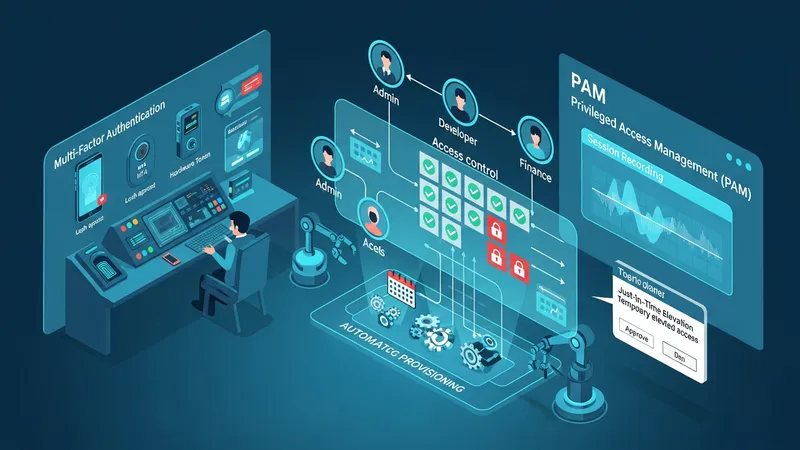
Identity management, access control, and data protection functions
Identity management systems centralize user lifecycle processes such as onboarding, role assignment, and deprovisioning. These systems often integrate with authentication mechanisms and may support single sign-on and federation for cross-domain access. Access control models such as role-based access control (RBAC) or attribute-based approaches can help align user privileges with responsibilities. Periodic access reviews and automated provisioning workflows may reduce stale privileges and help maintain least-privilege postures.
Multifactor authentication (MFA) and privileged access management (PAM) are common technical controls for reducing account compromise risk. MFA typically combines something a user knows with something they have or are, which can reduce credential-based attacks. PAM solutions may place elevated accounts in managed sessions, log activity, and require just-in-time elevation in some implementations. These controls often integrate with audit and monitoring systems so that privileged actions are visible and reviewable.
Data protection measures include encryption at rest and in transit, tokenization, and data loss prevention (DLP) controls. Encryption may be applied at storage, database, or application layers and is often complemented by key management services. DLP tools may monitor and block exfiltration paths or apply policy-based controls for sensitive content. Data classification programs often inform which protections are applied to particular information types and where stricter controls are warranted.
Practical considerations include managing credential lifecycle, balancing usability with control, and documenting data handling procedures. Overly restrictive authentication or access flows may drive users to work around controls, while lax practices increase exposure; striking a balance often requires governance, awareness training, and periodic review. Organizations may adopt phased deployments for identity controls to smooth user experience impacts and to validate integration with existing business systems.