
Cybersecurity Software And Services: Key Components And Core Functions Explained

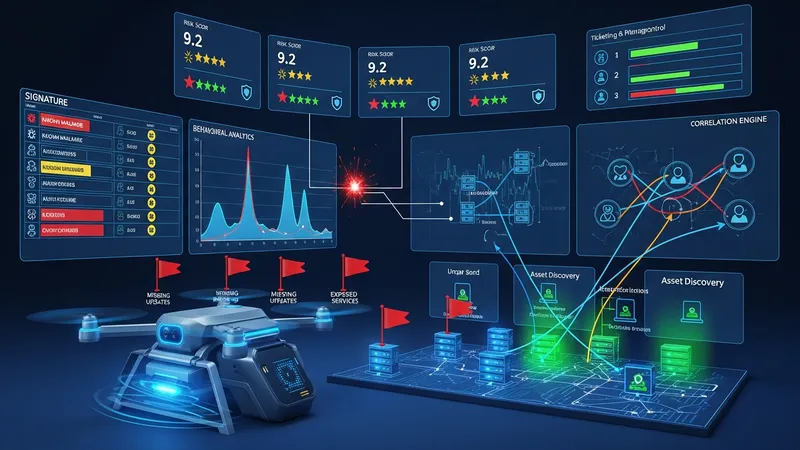
Threat detection methods and vulnerability assessment functions
Detection methods may combine signature databases, heuristic rules, behavioral analytics, and machine-assisted correlation. Signature-based detection can quickly identify known malicious indicators, while behavioral approaches may surface novel or stealthy activity by detecting deviations from established baselines. Correlation engines commonly link events across hosts, accounts, and network segments to reveal multi-stage patterns. Effective detection strategies often employ layered techniques so that indicators missed by one method may be captured by another.
Vulnerability assessment typically includes automated scanning, asset discovery, and contextual scoring. Scanners identify missing updates, insecure configurations, and exposed services; asset discovery helps ensure that unknown systems do not evade assessment. Contextual scoring may factor in exploit availability, asset criticality, and compensating controls to help prioritize remediation. Organizations frequently integrate scan outputs into ticketing or patch management systems to close the loop and track remediation progress over time.
Threat intelligence can augment detection and assessment by providing indicators of compromise, exploit trends, and attacker techniques. When applied cautiously, intelligence feeds may enrich correlation rules and provide context for prioritization; however, large volumes of threat indicators can increase noise if not filtered for relevance. Many organizations apply reputation scoring or contextual filters so that intelligence is actionable and aligns with known assets and business processes rather than generating broad, unfocused alerts.
Considerations for these functions include data retention, privacy, and resource allocation. Retaining sufficient telemetry supports historical analysis but increases storage needs and potential privacy exposure, so retention policies often balance investigative value against operational cost and legal considerations. Sampling strategies, tiered storage, and data minimization are commonly employed. Teams often document expected handling for sensitive logs and establish review cycles to ensure assessment processes remain aligned with evolving infrastructure.