
Cybersecurity Software And Services: Key Components And Core Functions Explained

Incident response, service models, and evaluation of cybersecurity software and services
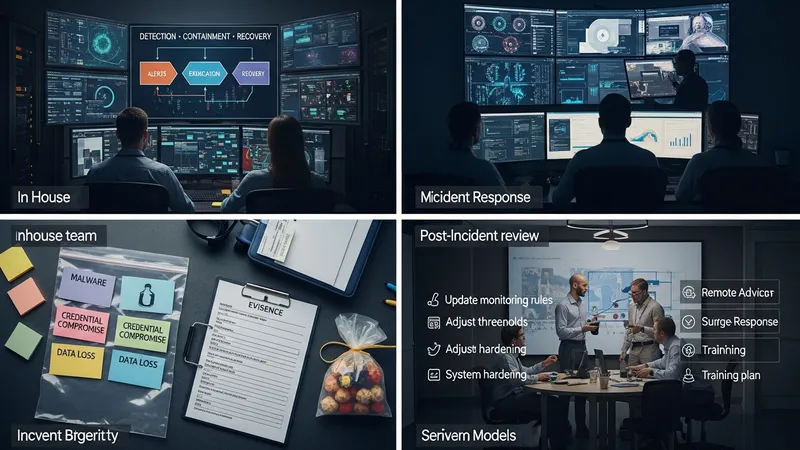
Incident response frameworks define detection, containment, eradication, and recovery activities and often include communication plans and evidence preservation steps. Playbooks may be tailored by incident type—malware, credential compromise, data loss—and should align with legal and regulatory obligations. Post-incident reviews frequently identify process gaps, instrumentation needs, and training topics; such reviews may drive adjustments to monitoring rules, detection thresholds, or system hardening activities.
Service delivery models vary from fully in-house operations to fully managed offerings. Managed services can provide extended hours coverage, threat hunting, or specialized forensics support, while internal teams provide direct access to environments and institutional knowledge. Hybrid arrangements often pair an internal security operations center with external advisory or surge-response support. Contractual clarity about roles, escalation paths, and data handling is a key consideration when engaging external providers.
Evaluation of tools and services commonly uses operational metrics such as mean time to detect, mean time to contain, false positive rates, and coverage of critical assets. These metrics are typically interpreted as trends rather than absolute performance guarantees and used to guide investments and process changes. Pilot deployments, reference architectures, and technical interoperability testing may help verify that a product or service fits operational workflows before broader adoption.
When planning for ongoing improvement, organizations may adopt continuous testing and measurement practices, such as simulated exercises and tabletop reviews, to validate response readiness. Regularly scheduled assessments, combined with lessons from actual incidents and evolving threat information, can inform updates to configurations, monitoring rules, and staff training. These iterative cycles typically increase resilience over time without implying any single tool or service is sufficient on its own.