
Credit Card Processing: How Payment Gateways And Merchant Accounts Work For Businesses

Merchant Accounts, Acquirers, and Banking Relationships in the United States
Merchant accounts are relationships between a merchant and an acquiring bank or an acquiring entity that enable settlement of card transactions. In the U.S., acquirers such as bank-affiliated services or independent acquirers take on merchant underwriting, set settlement timing, and may require documentation to assess business risk. Some providers offer aggregated or sub-merchant models where smaller merchants share an aggregate merchant account, while larger merchants often use dedicated acquiring accounts tied to their business bank accounts.
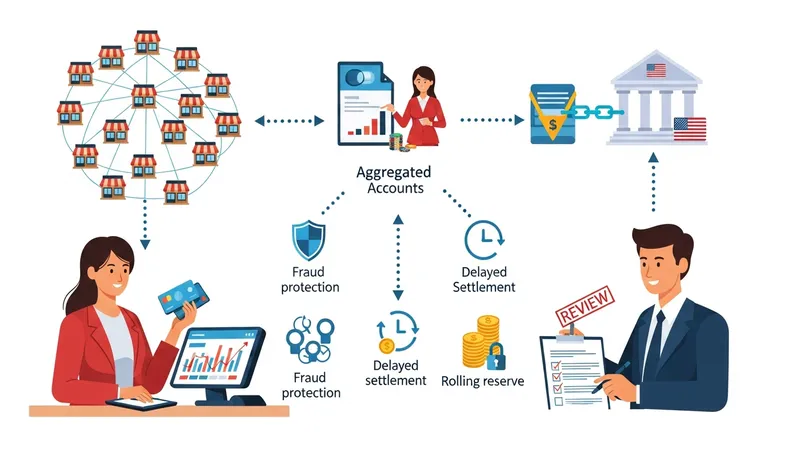
Underwriting processes may review business registration, average ticket size, chargeback history, and product category. Depending on risk factors, an acquirer can set rolling reserves, delayed settlement periods, or additional monitoring—measures that can affect cash flow. These practices are standard in U.S. acquiring relationships and are intended to manage fraud and potential losses, and they typically vary by industry and payment volume rather than being uniform across all merchants.
Acquirers and merchant-service partners commonly integrate with point-of-sale systems, gateways, and back-office software. For example, many retail chains in the United States connect terminals from certified vendors to their acquirer’s processing platform to obtain consolidated deposits and reporting. Bank-affiliated merchant services and independent acquirers each provide different contractual models and reporting interfaces that merchants may compare based on compatibility with their accounting and POS systems.
Settlement and reconciliation are central to the banking relationship. Acquirers aggregate daily batches of authorized transactions and initiate settlement to the merchant’s designated bank account after deducting interchange and any agreed fees. The timing and frequency of deposits can vary; merchants often coordinate with their accounting teams to map processor reports to bank deposits and to track chargebacks or adjustments that reduce settled amounts.