
CPQ Software: Understanding Configure-Price-Quote Solutions For B2B Sales

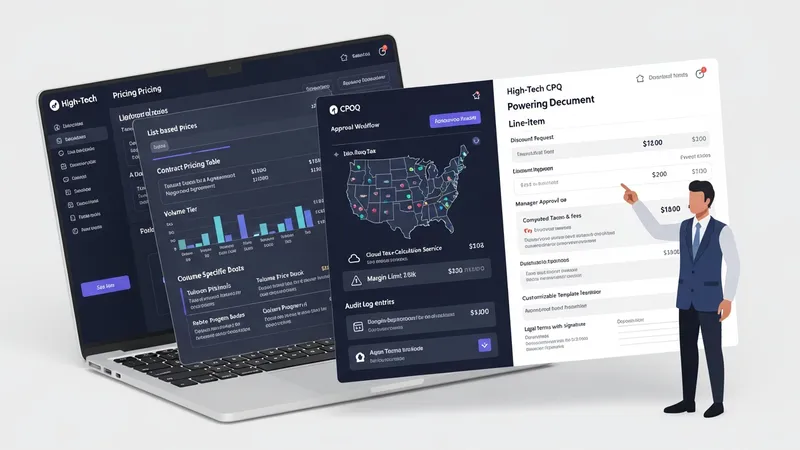
CPQ Software: Understanding Configure-Price-Quote Solutions for B2B Sales — Pricing Rules and Quoting Mechanics
Pricing engines embedded in CPQ often support multiple pricing methods such as list-based pricing, contract pricing, volume tiers, and customer-specific price books. In US markets, sales teams may deal with regional pricing differences, negotiated contract rates, and rebate programs; CPQ systems commonly provide mechanisms to apply these rules consistently. Discounting workflows and approval thresholds typically enforce margin limits so that non-standard pricing is escalated appropriately and recorded for compliance and forecasting.
Quoting mechanics include assembling line-item details, computing taxes and fees, and producing human-readable quote documents. US tax complexity—varying by state, locality, and product category—often requires integration with tax calculation services to produce accurate tax amounts on a quote. Document generation features in CPQ tools usually support customized templates, legal terms, and embedded pricing breakdowns so that quotes conform to corporate and regulatory requirements used across US jurisdictions.
Renewals, amendments, and subscription billing are pricing scenarios frequently handled by CPQ in US B2B settings. CPQ may integrate with subscription billing platforms to translate quote terms into recurring billing schedules and to handle amendments without creating billing disruptions. This is relevant for US companies offering service contracts, maintenance plans, or SaaS products where contract lifecycle events trigger downstream billing and revenue recognition processes.
Approval and audit trails are operational elements that support responsible pricing. CPQ systems often capture who changed a price, why an exception was granted, and what approvals were recorded. US organizations may use these trails to analyze discount patterns, enforce pricing policy adherence, and inform sales compensation or forecasting outputs. Such records can also assist in compliance reviews and internal controls.