
CPQ Software: Understanding Configure-Price-Quote Solutions For B2B Sales

CPQ Software: Understanding Configure-Price-Quote Solutions for B2B Sales — Integration, Workflows, and Sales Process Alignment
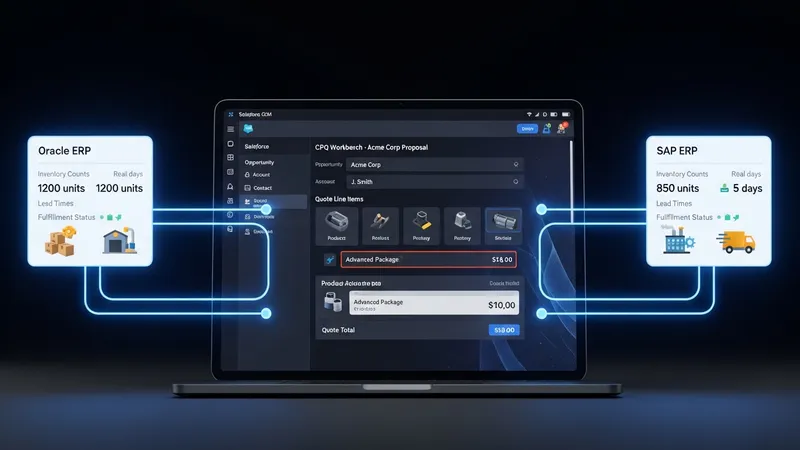
Integrations between CPQ and CRM platforms enable sales teams to initiate configurations with customer and opportunity context. In the United States, Salesforce is a commonly integrated CRM, and many CPQ deployments use the CRM opportunity stage, account records, and contact details to pre-fill quotes. Integration approaches range from native plug-ins to API-driven custom connectors; choice often depends on latency requirements, transaction volumes, and existing IT architecture in US enterprises.
ERP connectivity is another frequent integration point, feeding inventory, lead times, and fulfillment requirements into the CPQ process. US companies that run Oracle or SAP ERP systems may map CPQ-generated orders to ERP order management modules to coordinate manufacturing, procurement, and shipping. Synchronization strategies—real-time versus scheduled—are selected based on how current inventory and pricing data must be for accurate quoting and downstream processing.
Workflow orchestration in CPQ supports approval routing, legal review, and contract generation. In many US sales organizations, predefined approval thresholds route discount or bespoke-term requests to managers or legal teams with context and supporting documents. These workflows can reduce back-and-forth by presenting relevant configuration and pricing data to approvers, and audit logs commonly maintain evidence of decisions for compliance purposes.
User adoption considerations include role-based interfaces, guided selling wizards, and training materials that match US sales practices. Organizations frequently pilot CPQ with a subset of products or sales teams to refine workflows before broader rollout. Change management elements—such as documentation of standard operating procedures and staged enablement—are often emphasized to reduce disruption and to encourage consistent usage across US-based sales operations.