
Collaborative Workspaces: How Shared Environments Support Communication And Innovation

Types and configurations of collaborative workspaces in Hong Kong
Hong Kong hosts a range of collaborative workspace configurations that reflect diverse user needs. Co‑working venues provide flexible access options from hourly passes to monthly memberships, often concentrated in neighbourhoods like Sheung Wan, Central and Kowloon East. Incubators and accelerators—run by universities or public agencies—tend to combine desk space with mentorship and prototype facilities and may operate under selection processes. Corporate collaboration hubs within owned or leased office floors are another model; these are designed to bring internal teams together for focused projects and may be adjacent to public co‑working areas to facilitate external engagement.
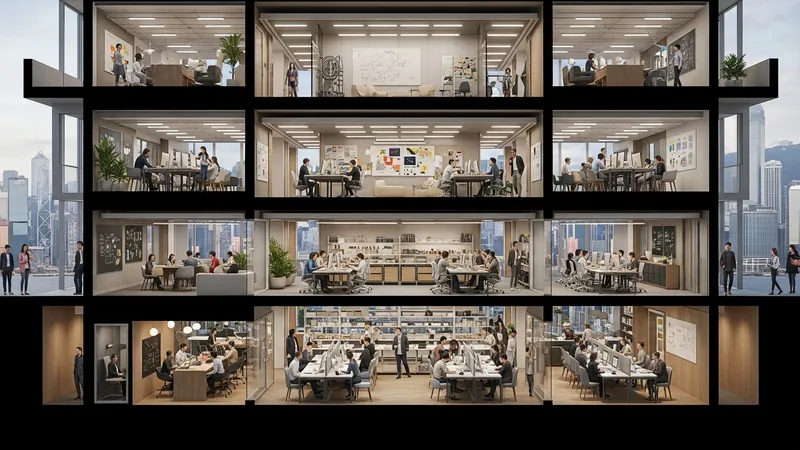
Physical size and layout vary from compact, high‑density floors to multi‑storey innovation centres. While co‑working floors may prioritise flexible desks and meeting rooms, incubator facilities in Hong Kong often include maker spaces, basic tooling, or lab benches depending on sector focus. Pricing structures typically reflect these differences: a basic hot‑desk in Hong Kong city centres may typically range from HK$1,500–HK$4,000 per month, whereas dedicated desks or private offices can commonly range from HK$5,000–HK$25,000 per month in central locations. These ranges are indicative rather than definitive.
User mix influences collaboration dynamics. In Hong Kong, venues that attract a combination of early‑stage startups, freelancers and corporate teams may see a higher incidence of cross‑sector interactions than single‑sector sites. Conversely, theme‑focused incubators (for example, biotech or creative industries) may prioritise specialised equipment and mentorship over high‑density desk sharing. Operators and hosts commonly consider how scheduling and membership rules will affect serendipitous encounters when designing occupancy plans.
Operationally, many Hong Kong spaces use online booking and access control to manage mixed occupancy, and they may offer tiered services such as mail handling, event support and meeting room packages. Landlord and building constraints, including fire safety and tenancy regulations, affect how operators can configure communal areas and open events. These constraints shape choices about circulation, maximum room capacities and the location of communal amenities, which in turn influence patterns of interaction and co‑working behaviour.