
Collaborative Workspaces: How Shared Environments Support Communication And Innovation

Design elements that support communication and innovation in Hong Kong spaces
Spatial arrangement is a primary factor shaping interaction. In Hong Kong, where floor area per person can be limited, designers often use modular furniture, visual sightlines and multi‑purpose zones to create opportunities for brief exchanges without requiring large volumes of space. Shared kitchens, central circulation corridors with seating, and semi‑enclosed brainstorming nooks may encourage short, frequent conversations that can lead to project collaboration. Acoustic treatments and zoning are typically added to balance openness with the need for focus.
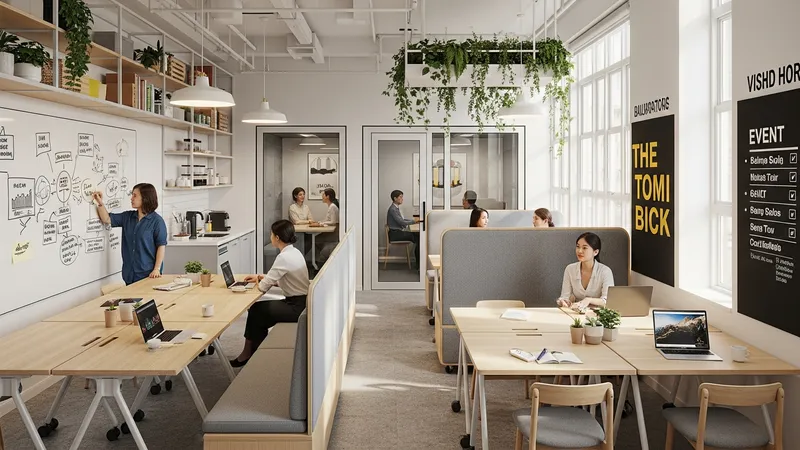
Visibility and cues for participation are practical design strategies used locally. Clear signage, visible activity boards and centrally positioned event noticeboards help unfamiliar occupants identify ongoing projects and potential collaborators. Whiteboard walls and writable surfaces positioned near meeting rooms or communal tables serve as low‑effort prompts for spontaneous ideation. In Hong Kong buildings, designers often integrate natural light, compact meeting pods and vertical storage to make small areas feel more usable for group interactions.
Technology integration supports communication in multiple ways. Room booking displays, unified videoconferencing equipment and shared file repositories help distributed teams coordinate use of physical space and maintain continuity with remote colleagues. Hong Kong operators frequently provide stable, managed Wi‑Fi and basic A/V setups in meeting rooms; some larger innovation centres offer prototyping equipment and lab infrastructure. Choice of technology typically balances cost, maintenance and user expectations for reliability.
Programming and facilitation are design complements. Physical layouts that allow for pop‑up events, demo tables and short presentation areas can be used to schedule low‑friction activities that introduce users to one another. Designers and community staff in Hong Kong often plan for different scales of interaction—brief encounters, scheduled workshops and multi‑day engagements—so that the space supports both incidental communication and deeper collaborative work without extensive reconfiguration.