
Collaborative Workspaces: How Shared Environments Support Communication And Innovation

Collaborative workspaces bring people together in shared physical and virtual environments to support regular communication, coordinated work, and the exchange of ideas. In a Hong Kong context, these environments include managed co‑working venues, university labs, incubator floors and company-run collaboration zones. The physical layout, booking systems, and facilitation methods in these settings are designed to lower barriers to interaction and to provide a mix of private and communal areas where short conversations and focused sessions can occur without formal scheduling.
Such shared environments typically combine spatial design, technology services and operational rules that influence how teams communicate and prototype ideas. Features often present in Hong Kong spaces include flexible desk types (hot desks, dedicated desks, private offices), reservable meeting rooms, whiteboard or prototyping areas, and event programming that brings different users together. Management practices—such as community managers or set hours for open brainstorming—can affect the frequency and quality of informal exchanges between occupants.
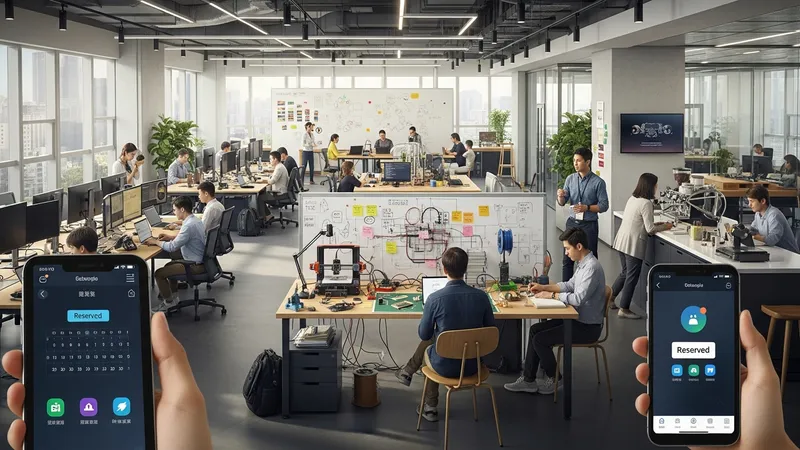
- Co‑working operators with Hong Kong locations — shared desk and private office arrangements commonly used by freelancers, startups, and distributed teams; memberships may typically range from HK$1,500–HK$10,000 per month depending on access level and location. Examples of local venues and information: PMQ, The Mills, and premises within Hong Kong Science & Technology Parks.
- Incubators and university innovation labs — structured spaces that often include mentoring and prototyping support for early‑stage projects; participation may be subsidised or operate under application processes administered by institutions such as Hong Kong Polytechnic University incubators or HKSTP programmes.
- Hybrid work models and platform tools used in Hong Kong offices — combinations of remote work policies, desk‑booking software, and integrated communication tools that coordinate space use across teams; many local operators integrate booking platforms or provide API links to corporate scheduling systems.
In Hong Kong’s dense urban context, proximity and mixed‑use buildings influence how collaborative settings are organised. Shared spaces often cluster in business districts such as Central, Admiralty and Kowloon East where rental pressures are higher; as a result, operators design for compact, multi‑function configuration and frequent turnover of users. Spatial strategies that encourage chance encounters—short circulation paths, visible communal tables, and adjacent event areas—may increase the number of informal exchanges that lead to collaborative activity. Designers and managers typically balance those elements against the need for quiet, focused zones to avoid distractive cross‑traffic.
Technology choices commonly found in Hong Kong shared environments may include integrated Wi‑Fi with visitor networks, cloud printing services, room scheduling displays and access control systems that support flexible use. These systems can generate anonymised usage data that operators and corporate tenants use to understand peak times, room utilisation and membership behaviour. When interpreted with care, such analytics may help managers adjust layout, opening hours or programming to better support collaboration without compromising privacy under local regulations.
Programming and facilitation are additional levers used to cultivate communication and innovation. Regular workshops, demonstration days and short mentoring sessions are often scheduled to expose different user groups to one another; event frequency and themes vary by operator and typically reflect local sector focus (for example, fintech events in Central or hardware demo days near manufacturing hubs in New Territories). In Hong Kong, partnerships between private operators and public support agencies also shape programming, which may influence who attends and the kinds of projects that receive attention.
Costs and membership frameworks in Hong Kong tend to be tiered and flexible to reflect varied user needs. Common models include day passes, monthly hot‑desk memberships, dedicated desks and private office leases; price ranges are typically influenced by location, serviced amenities and contract length. Operational expenses—rent, utilities, staff, cleaning and event facilitation—are the main cost drivers. Transparent reporting of these factors is often used by operators and corporate tenants to assess fiscal sustainability and to align space offerings with intended collaboration outcomes.
Measurement approaches seen in Hong Kong shared environments include simple usage metrics, user surveys, and tracking of collaborative outputs such as pilot projects or partnerships that emerge from the space. These indicators may be used cautiously to evaluate whether a workspace is supporting communication and early‑stage innovation activity; correlation does not imply causation, and many stakeholders treat such measures as one input among several when judging effectiveness. The next sections examine practical components and considerations in more detail.