
Coding Basics: Core Concepts Shared Across Popular Programming Languages

Coding basics: Control flow and repetition
Control flow constructs like conditionals and selection statements allow a program to choose among alternative paths. If-then-else structures, switch or pattern-matching constructs, and conditional expressions are common across languages but differ in expressiveness and syntax. Pattern matching, where available, can simplify complex branching by matching structure rather than individual boolean conditions. When designing logic, expressing conditions clearly and avoiding deeply nested branches often leads to more maintainable code.
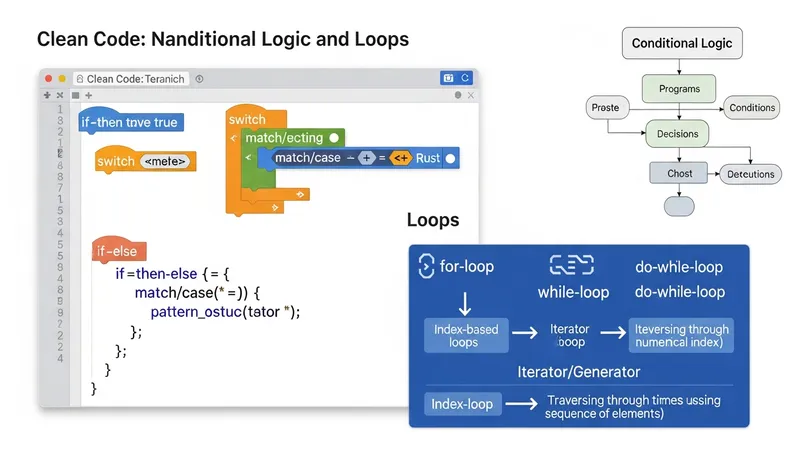
Repetition and iteration appear as explicit loops or implicit iteration constructs. For-loops, while-loops, and do-while-loops are widespread, while many modern languages also offer iterator patterns and higher-order functions for iteration. Using iterator protocols or generator constructs can reduce stateful loop management and may improve readability. When performance matters, selecting the appropriate iteration form — for example, index-based loops versus iterator-based loops — can have measurable effects depending on the runtime.
Error handling and exceptional control flow differ substantially across ecosystems. Some languages use exception-throwing mechanisms with try/catch blocks, while others favor result types or explicit error returns that must be checked. Each approach influences how callers must handle failure modes and can shape API design. Considering clarity of error propagation and avoiding broad catch-all handlers are practical considerations that may reduce silent failures and aid debugging.
Concurrency and asynchronous control flow are additional patterns relevant to repetition and sequencing. Event loops, threads, coroutines, and promises/futures represent various models for concurrent execution; each carries trade-offs in complexity and resource usage. Many common tasks are structured with asynchronous callbacks or await-style syntax that can simplify non-blocking operations. Understanding the concurrency model of a language helps avoid race conditions and guides suitable synchronization or immutability choices.