
Cash-Out Refinance Calculator: Estimating Potential Loan Amounts And Equity Access

Inputs and Assumptions Used by Cash-Out Refinance Estimation Tools
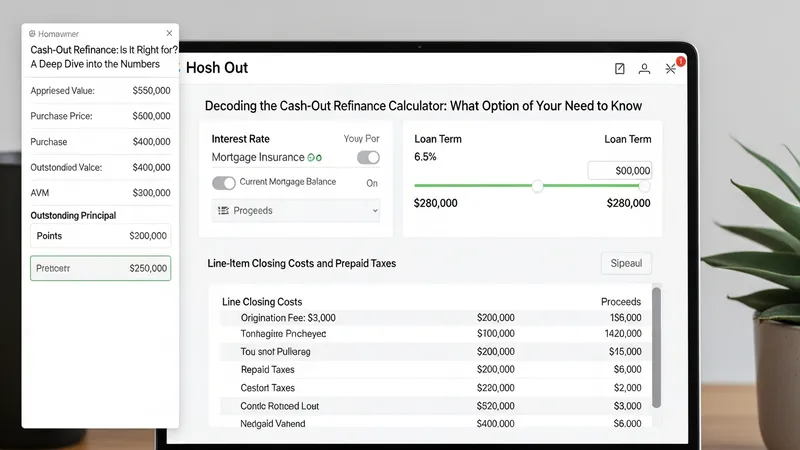
Property value assumptions influence every modeled outcome. Tools may accept an appraised value, a recent purchase price, or an automated valuation estimate (AVM); each source can yield different results. Outstanding principal on existing mortgage(s) must be entered accurately to avoid overestimating available equity. Lenders often cap allowable LTV at a policy-driven percentage, which the calculator uses to determine a maximum new loan size. Interest rate, loan term, and whether the model includes mortgage insurance or points are common assumptions that can be toggled in many tools to observe impacts on monthly payments and total interest modeled over the term.
Closing costs and prepaid items are handled differently across calculators. Some offer a field for estimated fees and taxes, subtracting those from gross proceeds to present net cash available; others present only gross loan size and leave net calculations to the user. Inclusion of mortgage insurance premiums or escrow reserves further affects proceeds and payment estimates. Tools that allow explicit entry of fees produce more realistic net-proceeds estimates, while simpler versions may be best used for rough comparisons. Users should confirm which cost categories a given tool includes before interpreting results.
Assumptions about underwriting and eligibility are usually abstracted. Calculators typically do not verify credit score, employment, or documentation status; instead, they reflect hypothetical lender policy through the chosen LTV cap and rate assumptions. Some tools include selectable product types (fixed-rate, adjustable-rate) that imply different underwriting expectations. Because final approval depends on an underwriting process, modeled outputs should be viewed as conditional scenarios rather than definitive offers. Clear labeling of assumptions in a tool helps maintain realistic expectations about the gap between estimate and approved loan.
Valuation margins and appraisal timing may also affect estimates. An AVM-based estimate might differ from the figure produced by a full appraisal, and market conditions can change between estimate and closing. Calculators that allow sensitivity testing against several value inputs can show how robust estimated proceeds are to valuation changes. When accuracy is important, pairing a modeled scenario with a lender’s guidance on appraisal expectations provides a more complete picture of likely outcomes without implying guaranteed results.