
Business Phone Systems: Key Features, Deployment Options, And Scalability

Key Feature Set and Integration Patterns in Business Phone Systems
Call routing and automated attendant services form the core of many business phone deployments, enabling inbound calls to be directed by time-of-day, caller input, or directory lookup. Advanced routing may include skills-based routing for contact centers and overflow handling to external queues. In U.S. organizations, these features often integrate with directory services such as Active Directory for user provisioning and may provide logging for operational reporting and compliance audits.
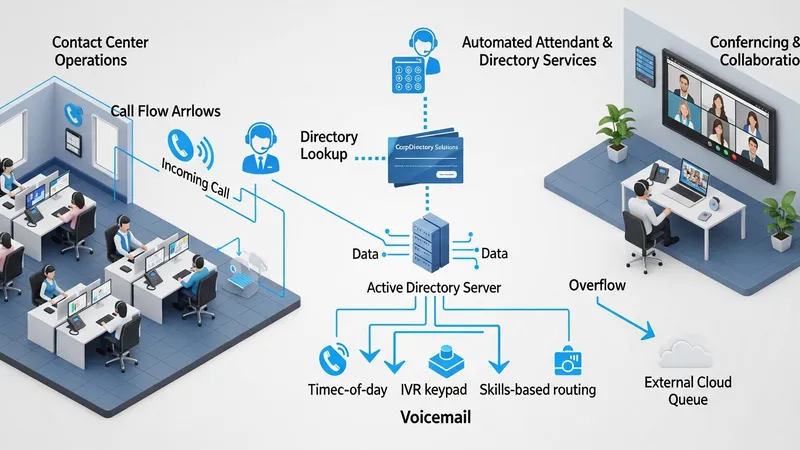
Conferencing and collaboration functions typically provide audio bridges, web conferencing, and screen-sharing capabilities. Conferencing capacity planning involves concurrent participant limits and bridge resources; many U.S. businesses compare hosted conferencing options versus on-premises bridges based on participant volume and data locality. Voicemail systems increasingly support voicemail-to-email transcriptions and searchable archives, which may affect retention policies and storage planning in line with corporate governance.
Integration with business software is a common requirement: telephone systems often provide APIs, webhooks, or native connectors for CRM, helpdesk, and workforce management tools. In the United States, popular integrations may target CRM platforms such as Salesforce, enabling click-to-dial, screen-pop customer records, and call logging. These integrations can streamline workflows and reporting but also introduce requirements for secure API credentials and audit trails.
Management and reporting features help administrators monitor usage trends, call quality metrics, and incident histories. Quality metrics such as jitter, packet loss, and Mean Opinion Score (MOS) are commonly tracked to diagnose voice quality issues. U.S. enterprises often standardize on centralized dashboards and alerting for threshold breaches, and may collect call detail records (CDRs) for billing or operational analytics while observing retention constraints under corporate policy.