
Business Phone Systems: Key Features, Deployment Options, And Scalability

Deployment Types and Infrastructure Considerations for Business Phone Systems
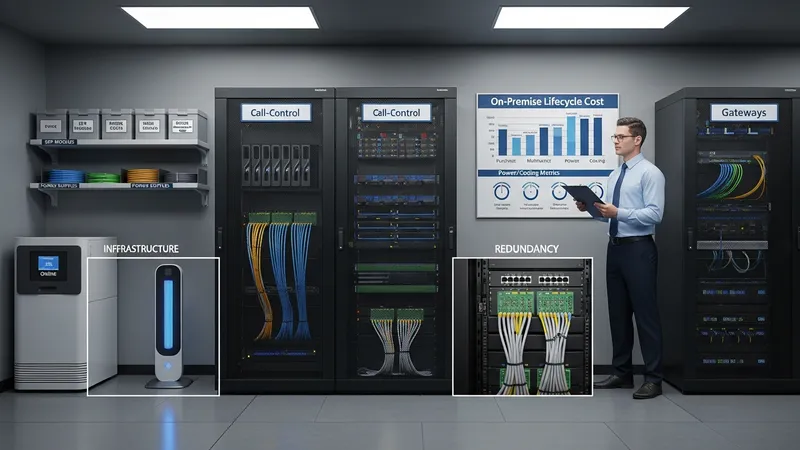
On-premises deployments typically place call-control servers, gateways, and analog/digital interface equipment within an organization’s facilities. These setups may be chosen where direct control over hardware, local PSTN interfaces, or certain regulatory configurations is required. In U.S. environments, on-premises systems can integrate with incumbent carrier circuits and private data networks; they may also require on-site maintenance contracts and spare parts planning. Organizations often assess life-cycle costs, power and cooling needs, and physical redundancy when considering an on-premises path.
Cloud-hosted VoIP services run call-control and ancillary services in provider data centers and are accessed over the public Internet or private WAN links. These services typically shift cost structures toward monthly operational charges and may reduce on-site equipment needs. In the United States, cloud services often include provider-managed features like software updates and geographic redundancy; however, enterprises frequently evaluate service-level agreements (SLAs), support response times, and how E911 information is handled by the vendor.
Hybrid approaches mix local infrastructure with hosted components to retain certain local controls while leveraging cloud resilience or rapid provisioning. For instance, a business may keep local call routing for internal traffic but use a cloud provider for long-distance routing or disaster recovery. Hybrid systems can ease phased migrations, allow retention of specialized on-premises integrations, and provide flexibility for compliance with state or sector-specific requirements in the United States.
SIP trunking is a common method for connecting internal systems to PSTN services via IP trunks rather than traditional T1/E1 lines. U.S. SIP providers offer per-channel and per-minute pricing models that may vary with geographic coverage and number portability considerations. Technical aspects to assess include session border controller (SBC) configurations, codec negotiation, NAT traversal, and redundancy across multiple SIP providers to maintain service continuity during carrier outages.