
Broadband Internet: Exploring Connection Types For Homes And Businesses

Connection Technology Features Within Broadband Internet for Homes and Businesses
The various connection technologies underlying broadband internet for both residential and commercial environments exhibit unique technical features that may influence user experience. For example, fiber optic broadband relies on optical signaling, typically providing symmetrical upload and download speeds and high bandwidth capacities. In contrast, cable internet, using coaxial cables, often offers higher download than upload speeds, which may suit video streaming and downloads but could limit frequent large uploads.
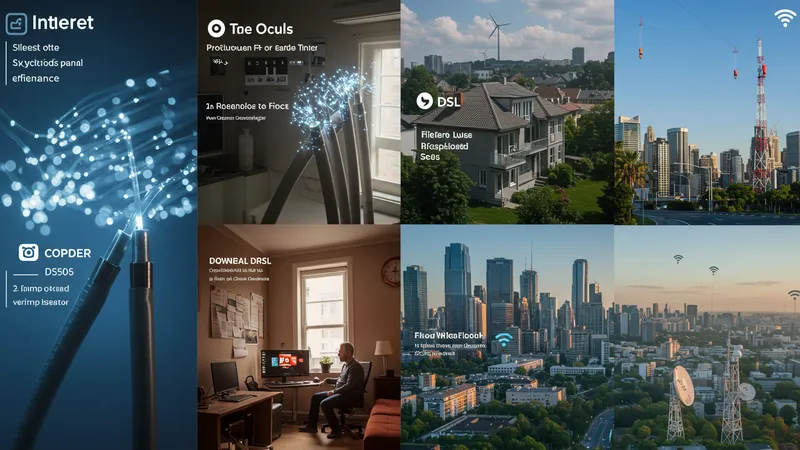
DSL broadband, leveraging copper telephone lines, can be less sensitive to electromagnetic interference but tends to deliver lower maximum speeds as compared to fiber or cable. Its performance often depends on the distance between the user and the local telephone exchange. Fixed wireless broadband uses line-of-sight radio transmission, providing flexibility in deployment but potentially facing challenges from obstructions like buildings or natural terrain.
Satellite internet can cover extensive areas regardless of terrestrial infrastructure, which is especially valuable in remote settings. It uses geostationary or low-Earth orbit satellites, but typical latency can be higher due to signal travel distances. Weather-related factors such as heavy rain may also temporarily reduce signal quality for satellite connections, which is less prevalent in wired alternatives.
Understanding these technical differences is important as they may affect real-world performance, reliability, and suitability for applications such as video conferencing, online gaming, or cloud backups. Each connection type’s features frequently shape service agreements, support provisions, and potential upgrade paths, providing context for long-term planning in both home and business environments.