
Broadband Internet: Exploring Connection Types For Homes And Businesses

Broadband internet refers to high-speed, continuous network access provided through various technologies to support both home and business connectivity. Unlike traditional dial-up connections, broadband maintains a persistent link and typically allows for faster data transfer rates, making it suitable for activities such as video streaming, teleconferencing, online education, and cloud-based applications. The ways in which broadband is delivered can differ significantly, with several types available, each with distinct mechanisms and infrastructure requirements tailored to diverse user needs.
Both residential and commercial users often consider multiple broadband connection types to address factors like speed, reliability, scalability, and geographic accessibility. Selection of an appropriate broadband solution may also depend on usage patterns, the number of connected devices, and business service level agreements. Understanding these options enables organizations and households to align their internet connectivity with operational or lifestyle requirements without overcommitting on resources.
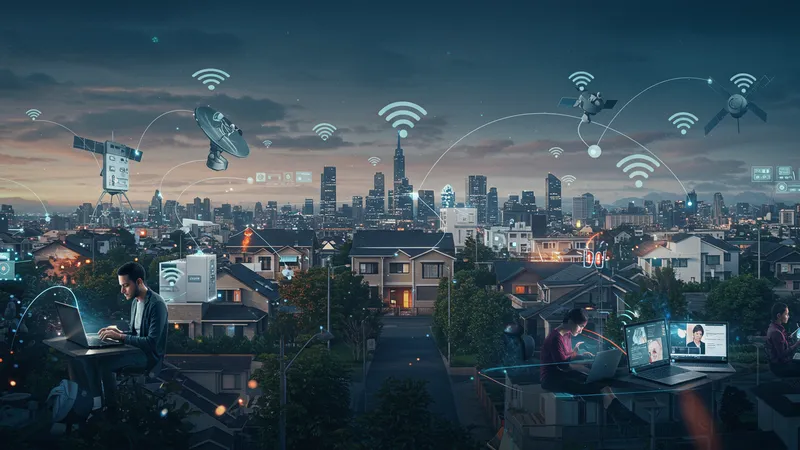
- Fiber Optic Broadband — Delivers high-speed data through fiber-optic cables. Typical estimated costs range from $40 to $100 per month for residential service, depending on bandwidth.
- DSL (Digital Subscriber Line) — Uses existing telephone lines for internet access. Monthly fees are typically between $30 and $70, varying by provider and speed tier.
- Cable Broadband — Utilizes coaxial cable TV infrastructure to provide broadband. Residential rates can range from $35 to $90 per month, depending on service speed.
- Satellite Internet — Provides coverage in remote locations via communication satellites. Typical residential plans may be priced from $50 to $150 per month, often based on data caps and bandwidth.
- Fixed Wireless Broadband — Delivers data over radio signals from towers to fixed locations. Costs may generally fall in the $40 to $120 monthly range, conditioned by speed and distance from the transmitter.
These broadband connection types have been included as they represent widely used and standardized forms of internet delivery across residential and business sectors. The pricing details provided are representative estimates often cited by industry sources, but actual costs can differ by region, service plan, and provider. Each example reflects a distinct method and infrastructure for achieving high-speed access, which can help users assess what may suit their requirements.
Fiber optic broadband is commonly regarded for high reliability and symmetric download/upload speeds, making it suitable for high-demand environments, but its availability is often concentrated in urban or developed areas. DSL and cable connections leverage pre-existing telephone and television infrastructure respectively, allowing for broader outreach but with variable speeds that can depend on distance from provider facilities or local network congestion.
Satellite broadband can serve areas where ground-based infrastructure is not feasible, such as rural or isolated locations. While it enables broader access, factors like latency and weather interference may impact performance. Fixed wireless offers another alternative for underserved regions, relying on line-of-sight transmissions between antennas and user equipment, providing moderate to high speeds with deployment dependent on local topography and tower placement.
Each broadband type typically requires specific hardware installations at the user’s premises, such as modems, routers, and in some cases, directional antennas or satellite dishes. Service agreements often specify data limits, service levels, and response times, which may be particularly important for businesses with critical connectivity needs. Examining these details can help inform practical decisions on broadband adoption, ensuring alignment with expected usage and resilience.
In summary, broadband internet access encompasses a range of connection types, each employing unique technologies and design considerations. Understanding these distinctions can facilitate informed decisions and optimal configurations for homes and businesses. The next sections examine practical components and considerations in more detail.