
B2B Lead Generation Automation: Key Processes And Workflow Fundamentals

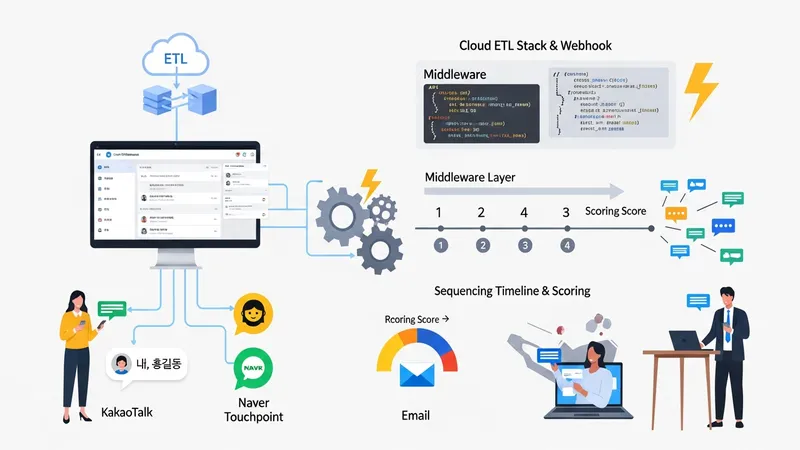
Automated Outreach Channels and Integrations in South Korea
Automated outreach in the Korean B2B environment often combines email with local channels such as KakaoTalk notifications and Naver-linked touchpoints. Integrations commonly use APIs or middleware to synchronize CRM records with messaging platforms so that triggers (e.g., a scoring threshold) initiate a sequence. When selecting channel mixes, teams often consider user preferences in Korea where messaging apps are frequently used for business communication alongside email, and adapt cadence and content format accordingly.
Technical integration patterns frequently involve a central CRM or data store that receives leads from webhooks, batch uploads, or cloud ETL jobs. From there, automation engines may manage sequencing and personalization tokens. In South Korea, some organizations use domestic CRM or ERP providers to maintain administrative continuity, while others combine local platforms with international tools that offer Korean-language support. Interoperability and clear field mappings are common topics in integration planning.
Message formatting and deliverability are practical considerations for automated outreach. For Kakao-based messaging, structured templates and limited message lengths may apply; for email, attention to domain reputation and authentication (SPF, DKIM) is common. Many teams in Korea monitor open and reply rates per channel and adjust volume or content type if engagement metrics change, treating channel health as a measurable element of the automation system.
Operational controls such as throttling, opt-out handling, and automated pause rules are often built into outreach workflows to manage recipient experience. These controls typically include records of consent revocation and mechanisms that prevent messages being sent to contacts who have opted out, which assists in maintaining compliance and predictable engagement patterns.