
Automated Ultrasonic Testing: Principles And Methods Explained

Measurement Techniques and Data Interpretation in Automated Ultrasonic Testing
Measurement techniques in automated ultrasonic testing comprise a variety of signal acquisition and processing approaches aimed at quantifying material characteristics and detecting anomalies. Techniques often employed in Mexican industrial settings include pulse-echo, through-transmission, and phased array measurements. Pulse-echo is a common baseline method where a single transducer emits and receives signals, allowing for thickness measurements and flaw detection. Through-transmission uses separate transmitter and receiver probes for enhanced sensitivity in some configurations.
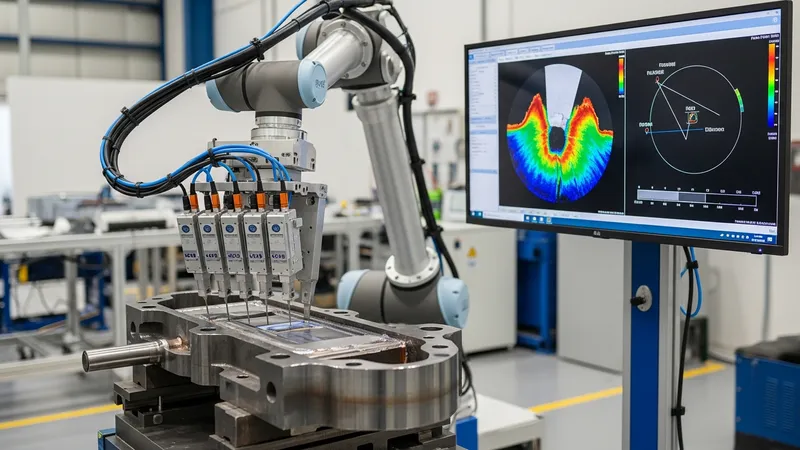
Phased array methods enable steering, focusing, and sweeping of ultrasonic beams, producing detailed cross-sectional images of inspected parts. This can improve detection of complex defect geometries often present in welded joints or cast components used throughout Mexico’s manufacturing sector. Data interpretation focuses on analyzing time-of-flight, amplitude, and signal shape variations. Automated systems notify operators of threshold breaches, but final adjudication typically requires professional assessment.
Signal processing techniques including filtering and noise reduction are often applied to enhance signal quality and reduce false indications. Advanced digital algorithms can generate A-scans, B-scans, and C-scans that visualize subsurface features in different formats, aiding in material characterization. Within the Mexican industrial context, these visualizations support quality assurance, particularly in regulated areas such as pressure vessels or pipelines.
Interpreting ultrasonic data must consider factors like attenuation variations due to grain structure or surface roughness, which are common in metals produced or treated in Mexico. Calibration with representative samples assists in accounting for such variations, improving measurement reliability. Operators analyzing data often receive specialized training to correlate ultrasonic signatures with known defect morphologies under Mexican standards and operational conditions.