
Automated Ultrasonic Testing: Principles And Methods Explained

Inspection Workflows and Procedural Standards in Mexico
Automated ultrasonic testing procedures are generally structured to follow a series of standardized steps, ensuring consistent inspection quality. In Mexico, workflow design often aligns with guidelines set forth by the American Society for Nondestructive Testing (ASNT), adapted through national bodies like the Asociación Mexicana de Ensayos No Destructivos (AMEND). Inspection workflows start with asset selection and risk assessment to determine scanning coverage and frequency of testing. Subsequently, equipment calibration with certified reference materials is typically performed to establish baseline measurements.
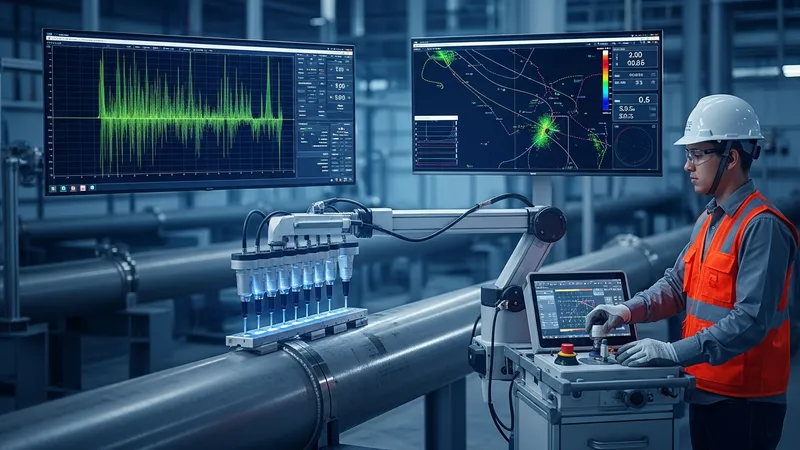
Once calibrated, automated scanning is conducted along programmed paths that ensure comprehensive coverage of the target areas. Inspections may include linear, raster, or contour scans depending on geometry. During the scan, data logging captures the ultrasonic echoes for each inspection point, often including timestamping and positional coordinates. This systematic data collection facilitates detailed analysis for defect identification and sizing. Mexican operators are usually trained in national standards such as NMX-ISO 17640 to carry out these processes effectively.
Post-inspection stages involve signal analysis where automated software assists in detecting potential anomalies by highlighting areas where signal characteristics differ from expected norms. These flagged signals are further reviewed by experienced inspectors for verification. Documentation of results is commonly required under Mexican regulatory frameworks to maintain traceability and compliance with safety requirements. Inspection reports include detailed descriptions of detected variations, often supplemented with generated ultrasonic images or C-scans.
Workflows also consider practical aspects such as surface preparation, access restrictions, and environmental conditions that may affect signal quality. For instance, in Mexico’s oil refinery zones, ambient noise and temperature may necessitate specific procedural adaptations. Structured workflows enhance repeatability and minimize operator-dependent variabilities, contributing to reliable inspection outcomes aligned with industry requirements.