
Automated Lead Generation: How Businesses Use Technology To Capture And Qualify Prospects

Integration and platform considerations for automated lead systems
Choosing integration patterns is a practical step in building automated lead pipelines. Common architectures in the United States include direct native integrations between capture tools and CRMs, middleware platforms that transform and route records, or custom APIs for high-volume needs. Native integrations can simplify setup for standard use cases, while middleware may be preferred when combining several sources or applying complex enrichment and routing logic across multiple systems.
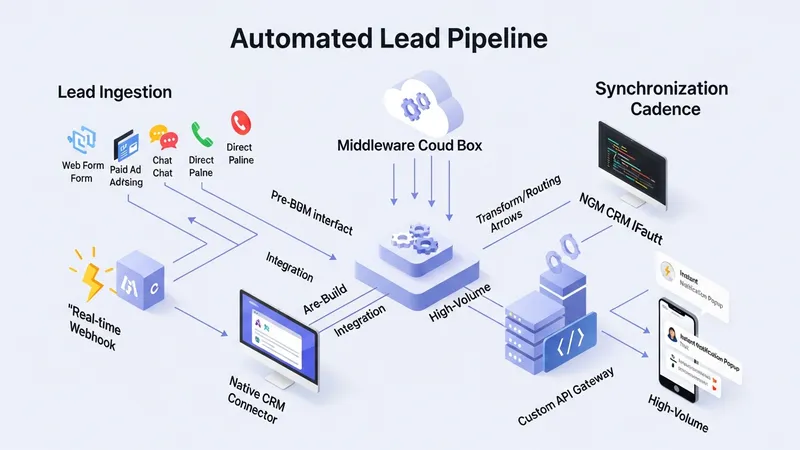
Synchronization cadence matters for how fresh lead data appears in downstream tools. Some systems perform near-real-time ingest via webhooks, enabling prompt follow-up; others batch-import leads hourly or daily. US sales organizations that prioritize rapid contact times may configure webhooks to create immediate notifications or tasks. When near-real-time processing is used, architects often include safeguards such as rate limits and deduplication checks to prevent processing spikes or duplicate entries.
Platform cost considerations vary by scale and feature set. Small US firms may use entry-level plans from marketing automation vendors that can start in a range of roughly $20 to $200 per month for limited contacts, while enterprise-grade subscriptions or extensive API usage may increase costs to several hundred or thousands of dollars monthly. These ranges may depend on contact volumes, required integrations, and the number of users; budgeting should account for data enrichment fees and any middleware or developer resources needed for custom integrations.
Security and access controls are key when integrating lead systems. Typical measures in US deployments include role-based access to lead records, audit logs of data changes, and encryption in transit and at rest. Integration design should also document which systems are authoritative for specific fields to avoid conflicts when two tools update the same attribute. Clear ownership and documented data flows aid in troubleshooting and compliance audits.