
Automated Lead Generation: How Businesses Use Technology To Capture And Qualify Prospects

Lead qualification and scoring workflows for automated systems
Lead scoring assigns quantitative values to prospect actions and attributes so automation can classify readiness. Typical scoring models used by US firms combine behavioral signals (page visits, content downloads) with firmographic data (company size, industry). Scores may be configured to trigger different automated paths—such as handoff to sales above a threshold or inclusion in a nurture sequence below it. It is common to periodically review scoring models and adjust weights to reflect observed conversion patterns rather than assuming initial settings will remain optimal.
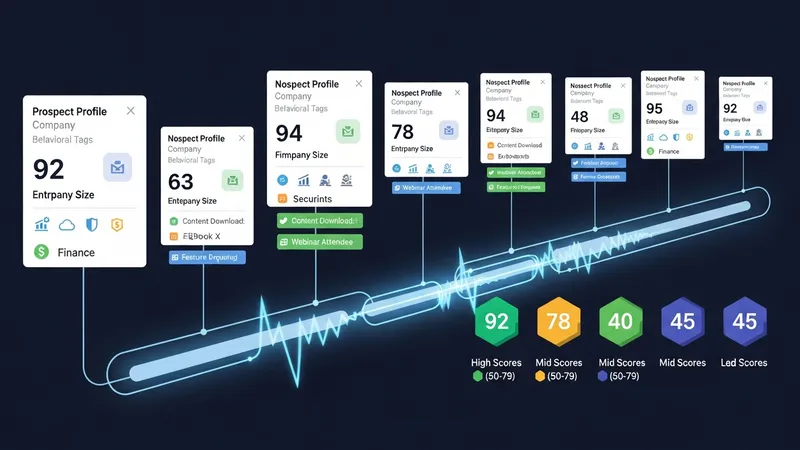
Data enrichment supplements capture data with external records to provide more complete profiles. US organizations may use third-party enrichment services to append company information, job titles, or business contact details; this can reduce manual lookups and help routing rules target the appropriate teams. Enrichment typically runs via APIs and may be performed at capture time or in batch; teams should monitor enrichment quality and establish fallbacks when third-party data is unavailable or inconsistent.
Qualification workflows may combine automated filters with human review. For instance, automation can surface leads that meet baseline criteria and flag others for manual vetting. In the United States, some sales teams prefer receiving only leads that pass initial automated thresholds to conserve prospecting capacity. Workflows should document handoff conditions and visibility rules so that both marketing and sales understand why certain leads are routed or deprioritized.
Machine-assisted classification, including predictive models, may be used to identify high-potential prospects based on historical conversion patterns. When applied in US settings, predictive approaches often require sufficient historical data and attention to bias and explainability. Teams typically test predictive models on holdout samples before operational use and retain the ability to override automated classifications when necessary to prevent systematic errors from propagating through follow-up processes.