
Automated Dimensional Inspection: Key Processes And Techniques Explained

Measurement Accuracy and Calibration Considerations
Achieving reliable measurement accuracy in automated dimensional inspection depends heavily on calibration processes and system design. Calibration involves adjusting sensor outputs to correspond with known standards or reference artifacts, helping to align measurement data to traceable benchmarks. Regular calibration is often conducted to maintain instrument precision as environmental factors and wear can influence sensor performance over time.
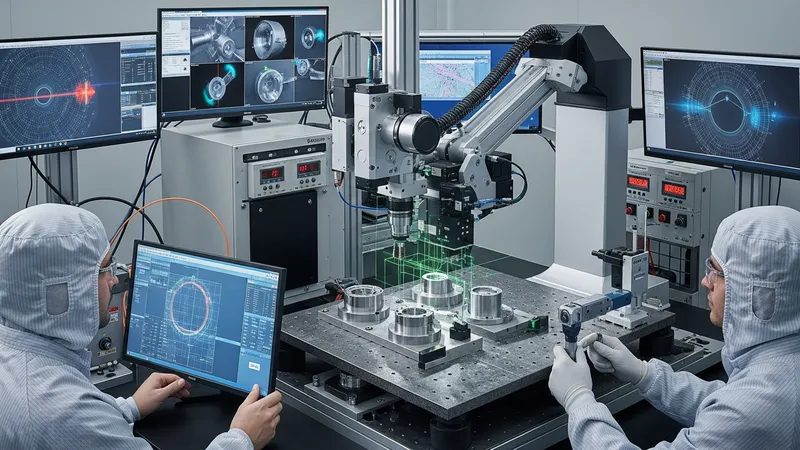
Environmental stability such as temperature control is particularly relevant, as thermal expansion or contraction can affect both parts and measuring devices. Vibrations or airborne particles within production settings might also interfere with sensitive measurements, and appropriate safeguards or isolation methods may be employed. Understanding and managing these variables contributes to maintaining consistent inspection results.
The software used in these systems plays a role in compensating or adjusting for expected measurement variations. Algorithms may apply filtering, noise reduction, or geometric fitting techniques to refine raw sensor data. However, the interpretations are typically subject to uncertainty ranges dictated by sensor resolution, calibration quality, and environmental conditions.
When comparing different inspection methods, tactile measurements can offer finely detailed point data but might take longer and be influenced by probe condition. Optical methods generally allow faster scanning with broad surface data but could be less precise on reflective or transparent materials. Hence, accuracy considerations must account for both equipment capabilities and operational context to appropriately assign confidence levels to inspection outcomes.