
Automated Dimensional Inspection: Key Processes And Techniques Explained

Data Capture Methods in Automated Dimensional Inspection
Effective data capture in automated dimensional inspection relies on the interaction between sensing technology and software interpretation. Laser-based sensors capture dense point clouds by reflecting laser light off a surface, which are then processed to build three-dimensional models. This method provides comprehensive surface information, although it may be sensitive to reflective or transparent materials.
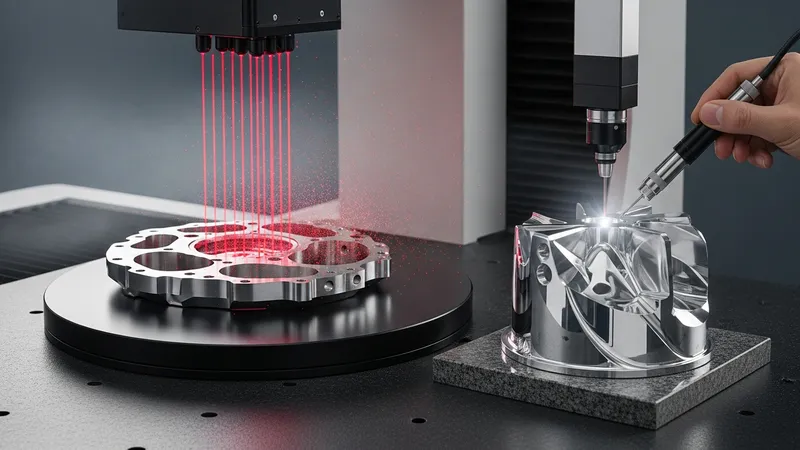
Tactile probes in devices like CMMs collect discrete measurements at predefined contact points. These readings require stable setups and controlled environments to minimize measurement variations. The tactile approach allows for precise dimension readings, particularly on machined or engineered surfaces, but generally involves longer cycle times than optical methods.
Vision-based systems utilize digital cameras combined with controlled lighting conditions to capture images of components. Software algorithms then analyze these images to detect edges, contours, or geometric features, converting visual data into quantifiable measurements. This non-contact method is often used for faster assessments and can be integrated directly on production lines for immediate feedback.
Structured light scanning is another data capture technique where patterns of light, often stripes, are projected onto a surface. Distortions in these patterns allow software to calculate shapes and surface profiles. This technique adds versatility for inspecting complex components and may achieve reasonable accuracy in a controlled environment. Data capture methods vary in their suitability depending on inspection speed, required detail, and part characteristics.